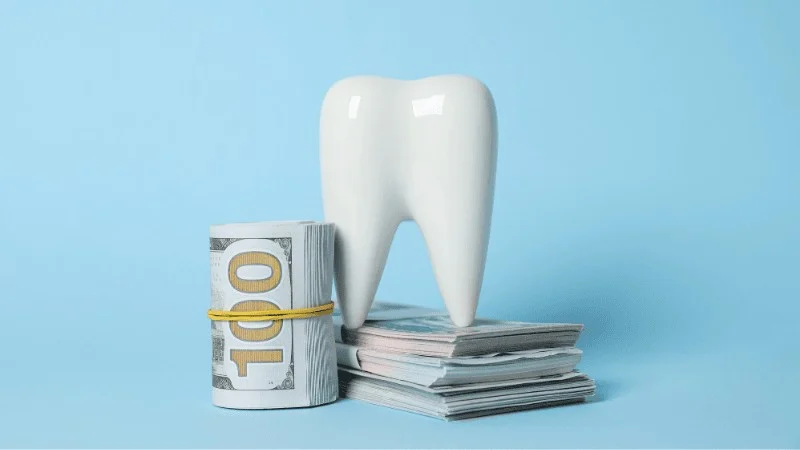
Dental implants can transform your smile and restore your ability to eat comfortably, but the price tag often leaves people wondering what they’re actually paying for.
A single tooth replacement typically runs between $3,000 and $6,000, though the final bill depends on several factors you might not expect.
The total cost of dental implants depends on the implant fixture, abutment, and crown, plus any needed procedures like bone grafts or sinus lifts, with prices varying by your location, provider experience, and case complexity.
Some patients need only the basic components, while others require extra steps to prepare the jawbone or gums. The good news is that understanding these cost drivers helps you plan your budget and find ways to make treatment more affordable.
Whether you’re replacing one tooth or considering full-mouth dental implants that can cost between $24,000 and $50,000, knowing what influences the price puts you in control.
This guide breaks down each component so you can ask the right questions and make informed decisions about your dental health.
Key Takeaways
- Dental implant costs include the fixture, abutment, and crown, with additional fees for bone grafts, imaging, and anesthesia
- Your location, provider expertise, case complexity, and material choices can shift prices by 10-40% across different regions
- Insurance coverage varies widely, but payment plans and staged treatment can help spread costs and reduce upfront expenses
Core Components of Dental Implant Costs
A dental implant isn’t just one piece. The dental implant cost includes three main parts that work together to replace your missing tooth: the implant post that goes into your jawbone, the abutment that connects everything, and the dental crown that sits on top.
Implant Post and Materials
The implant post is a small screw made of titanium or zirconia that your dentist places into your jawbone. This post acts as the root of your new tooth.
Titanium posts are the most common choice because they bond well with bone through a process called osseointegration. This natural fusion takes several months but creates a strong foundation.
Zirconia posts cost more but offer a metal-free option if you have allergies or prefer an alternative.
The material quality affects both the price and how long your implant lasts. Higher-grade materials typically cost between $1,500 and $2,500 for just the post. Premium brands invest in research and testing to ensure their implants stay stable for decades.
Abutment and Dental Crown Choices
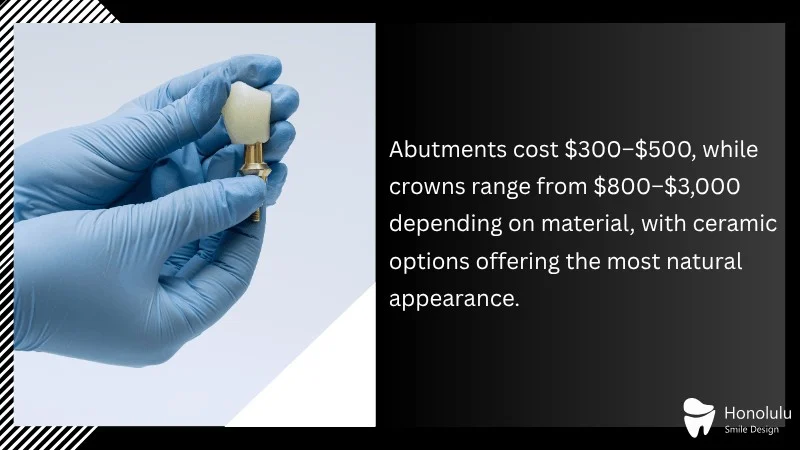
The abutment is a connector piece that attaches to your implant post and holds the dental crown in place. You’ll pay $300 to $500 for a standard abutment, while custom-made options cost more.
Your dental crown is the visible part that looks like a natural tooth. Crowns come in different materials with varying price points:
- Porcelain-fused-to-metal: $800 to $1,500
- All-ceramic or all-porcelain: $1,000 to $3,000
- Zirconia: $1,500 to $2,500
All-ceramic crowns look most natural but cost more than metal-based options. Your dentist shapes and colors the crown to match your other teeth.
Surgical Placement and Procedure Fees
Implant surgery involves cutting into your gum tissue, drilling into your jawbone, and placing the post. Your dentist’s surgical fees typically range from $1,000 to $3,000 per implant.
These fees cover the dentist’s expertise, the surgical tools, anesthesia, and the operating room. More complex cases take longer and require additional skill, which increases the cost.
Your dentist may charge extra if you need sedation beyond local anesthesia. The procedure usually takes one to two hours per implant, though the total cost of dental implants depends on several key factors unique to your situation.
Procedures and Add-Ons That Affect Price
Many patients need extra procedures before getting implants, and these steps can add $200 to $8,000 to your total bill. Your jaw bone health and tooth condition determine which add-ons you’ll need.
Bone Grafting Requirements
Your jawbone needs enough thickness and density to hold an implant securely. If you’ve had missing teeth for a while, your bone may have shrunk or deteriorated.
Bone grafts typically cost between $200 and $4,000 depending on how much bone material you need and where it comes from.
Your dentist can use different graft sources. Bone from your own body costs more because it requires a second surgical site. Processed donor bone or synthetic materials are usually less expensive.
The amount of grafting affects price too, a small graft to fill one area runs much less than rebuilding an entire section of jaw.
Most bone grafts need 3-6 months to heal before your dentist can place the implant. You need to discuss all the do’s and don’ts with your dentist. This healing time doesn’t increase the graft cost itself, but it does extend your overall treatment timeline.
Sinus Lift Procedures
A sinus lift becomes necessary when you need an upper back tooth implant but don’t have enough bone height. Your sinuses sit right above your upper jaw, and sinus lift procedures range from $1,000 to $4,000 based on complexity.
There are two main approaches. A direct sinus lift works for severe bone loss and requires opening the gum and bone to access the sinus membrane directly.
An indirect lift handles minor bone deficiency and can sometimes happen during the same appointment as your implant placement.
The procedure adds bone material between your jaw and sinus membrane. Like regular bone grafts, you’ll need several months of healing before continuing with your implant. Your dentist will use imaging to measure your bone height and determine if you need this step.
Tooth Extraction Before Implants
You’ll need an extraction if your damaged tooth is still in place before getting an implant. Simple extractions for fully erupted teeth cost $75-$300 per tooth. Surgical extractions for broken or impacted teeth run $150-$650 each.
Some dentists can place an implant right after extraction in the same visit. This immediate placement saves you time and a second surgery, though it’s not possible in all cases. If infection is present or your bone needs healing first, you’ll wait 2-4 months between extraction and implant placement.
The extraction cost usually stays separate from your implant package price. Ask your dentist upfront whether your quote includes removal of any remaining tooth structure or if that’s billed separately.
Type and Number of Implants Needed
The number of teeth you need to replace directly affects your final bill, with single implants starting around $3,000 and full-mouth solutions reaching $60,000 or more.
Different implant systems (from individual posts to All-on-4 designs) carry distinct price tags based on complexity and materials.
Single Dental Implant Cost
A single tooth implant cost typically falls between $3,000 and $4,500 when you include the implant post, abutment, and crown. This option works well if you’re replacing one missing tooth and want a permanent solution that looks and feels natural.
The three main parts of a single dental implant contribute to the total price. The titanium post that goes into your jawbone usually costs $1,500 to $2,000. The abutment connector adds another $300 to $700.
The custom crown that sits on top ranges from $1,000 to $2,500 depending on the material you choose.
Your dentist might recommend additional procedures before placing the implant. Bone grafting adds $300 to $3,000 if your jaw lacks sufficient density. Tooth extraction costs another $150 to $400 if the damaged tooth is still present.
Multiple and Full-Mouth Dental Implants
Full mouth dental implants cost between $60,000 and $90,000 when you’re replacing all teeth in both arches. This price covers 12 to 16 individual implants plus the custom restorations attached to them.
The total cost varies by the number of implants your treatment plan requires. Replacing three to four adjacent teeth with individual implants costs $9,000 to $18,000. A full upper or lower arch using traditional methods with six to eight implants per arch runs $30,000 to $45,000.
You’ll pay more for full-mouth implants than dental bridges or dentures, but they offer better durability. Traditional dentures cost $1,500 to $4,000 but don’t prevent bone loss. Fixed dental bridges run $3,500 to $15,000 and require grinding down healthy adjacent teeth.
All-on-4 and Implant-Supported Solutions
The All-on-4 approach costs $12,000 to $40,000 per arch and uses just four strategically placed implants to support a full set of replacement teeth. This technique reduces surgical time and often eliminates the need for bone grafting.
All-on-4 offers a more affordable alternative to traditional full-mouth implants because you need fewer implant posts. A complete upper and lower restoration ranges from $40,000 to $80,000, significantly less than placing 12 to 16 individual implants.
The fixed denture attaches permanently to the four implants, so you won’t remove it like traditional dentures.
Cost Comparison for Full-Arch Solutions:
| Solution Type | Implants Per Arch | Price Range Per Arch |
| All-on-4 | 4 | $12,000–$40,000 |
| Traditional Full-Arch | 6–8 | $30,000–$45,000 |
| Individual Implants | 12–14 | $36,000–$63,000 |
Your specific anatomy and bone quality determine which tooth replacement option works best for your situation.
Provider Expertise, Technology, and Geographic Factors
The dentist you choose, the tools they use, and where they practice can change your implant costs by thousands of dollars. Provider expertise and geographic location commonly shift prices by 10-40% across the U.S.

Specialist vs. General Dentist Fees
An oral surgeon or periodontist typically charges more than a general dentist for dental implant placement. These specialists have extra years of training focused on surgical procedures and complex cases.
General dentists may charge $1,500 to $3,000 per implant for straightforward cases. Specialists often charge $2,500 to $4,500 for the same procedure.
The price difference reflects their advanced training and experience handling difficult situations like bone loss or nerve proximity.
You might need a specialist if you have complicated health issues or limited jawbone. While their fees are higher, specialists may reduce your risk of complications. This can save you money on future repairs or additional procedures.
Some general dentists work with specialists on a referral basis. You might see the general dentist for planning and the crown, but visit a specialist just for the surgical placement.
Advanced Techniques and Guided Implant Surgery
Guided implant surgery uses 3D imaging and computer planning to place implants with exact precision. This technology costs more upfront but offers better accuracy than traditional freehand methods.
GPS-guided systems create a digital map of your mouth before surgery. The dentist uses this map during the procedure to position each implant at the perfect angle and depth.
These advanced techniques reduce surgical errors and improve long-term success rates. Dental implant success rates are high, often exceeding 95%.
Clinics using this technology may add $400 to $700 for 3D imaging and digital planning. The total cost often runs $1,000 to $2,000 higher than traditional methods. However, you get faster healing times and fewer follow-up visits.
Not every case needs guided surgery. Simple single-tooth replacements in healthy bone may do fine with traditional placement methods.
Location-Based Price Variations
Where you live affects how much you pay for dental implants. Cities with higher costs of living charge more for the same procedures.
Urban clinics charge more than rural practices because of higher rent, utilities, and staff salaries. A single implant in New York City might cost $6,500 to $8,000. The same treatment in a smaller Texas city could run $4,200 to $5,800.
Regional Cost Examples:
- Major metropolitan areas: $5,000 – $8,000 per implant
- Mid-size cities: $3,500 – $5,500 per implant
- Rural areas: $2,500 – $4,500 per implant
Some patients travel to other states or countries for more affordable care. International options in places like Turkey or Mexico can cost 50-70% less than U.S. prices. Just make sure any clinic you choose follows proper safety standards and sterilization protocols.
Insurance, Payment Plans, and Ways to Save
Most dental insurance plans treat implants as cosmetic procedures, but dental discount plans can save you an average of 50% on implant costs. Payment plans and alternative options like dental schools offer additional ways to make implants more affordable.
Dental Insurance and Dental Discount Plans
Most traditional dental insurance doesn’t cover implants because they’re often classified as cosmetic treatment. If your plan does include implant coverage, you might save 10-20% off the total cost.
The challenge is that dental insurance annual spending caps typically range from $1,000 to $1,500. This amount barely covers one mini-implant, leaving you with significant out-of-pocket expenses.
Some insurance plans may cover portions of the procedure, like the crown or dentures, even if they won’t pay for the implant itself.
Dental discount plans work differently than insurance. These plans have no annual spending limits, which matters a lot for expensive procedures. You can start using discounts within 72 hours of joining, with no waiting periods.
Plan members report saving around 50% annually on their dental care costs, and these savings apply to virtually all dental procedures including implants.
Financing, Dental Schools, and Medical Tourism
Many dental offices offer payment plans for dental implants that let you spread costs over several months or years. These plans make large expenses more manageable by breaking them into smaller monthly payments.
Dental schools provide another option for affordable dental implants. Students perform procedures under close supervision from experienced instructors, which can reduce costs by 30-50% compared to private practices.
Medical tourism has become popular for dental work. Some patients travel to countries where dental implants cost less than in the United States. Turkey and other countries offer significantly lower prices while maintaining quality standards.
However, you need to factor in travel costs, time away from home, and potential challenges with follow-up care.
Affordable Dental Implant Options
Mini dental implants cost less than traditional implants, ranging from $500 to $1,500 per implant. This price often includes the implant, abutment, and crown.
They work well for stabilizing dentures and are a good option when you need a more budget-friendly solution.
All-on-4 implants might seem expensive at $20,000 to $30,000 per jaw, but they replace an entire arch of teeth with just four implants. This makes them more cost-effective than placing individual implants for each missing tooth.
Comparing prices from multiple providers helps you find competitive rates. Different dentists charge different amounts for the same procedures, so getting several quotes can reveal significant price differences.
Some clinics also offer in-office membership plans that reduce costs for patients without insurance.
Comparing Dental Implants to Other Tooth Replacement Options
When weighing your options for missing teeth, the upfront price is just one piece of the puzzle. Bridges typically cost less initially but require altering healthy teeth, while dentures offer the most budget-friendly start but need regular replacements.
Dental Bridges vs. Implants
Dental bridges cost between $2,000 and $5,000 for a traditional fixed bridge, making them cheaper upfront than implants. However, bridges require grinding down your healthy neighboring teeth to serve as anchors.
This means you’re sacrificing two good teeth to replace one missing tooth.
Implants don’t touch your surrounding teeth at all. They stand alone in your jawbone, which keeps your other teeth intact and healthy.
Lifespan Differences:
- Bridges last about 10-15 years before needing replacement
- Implants can last decades or even a lifetime with proper care
- Bridges may need adjustments as your jawbone changes shape over time
The tooth implant cost ranges from $3,000 to $6,000 per tooth, including the implant post, connector piece, and crown. While this seems higher initially, you won’t face the replacement costs that bridges require every decade or so.
Dentures and Partial Replacement Alternatives
Complete dentures cost between $1,500 and $3,000 for a full set, making them the most affordable option at first. Partial dentures run even lower, typically $700 to $1,800 for replacing several teeth.
The hidden costs add up:
- Denture adhesives and cleaning products monthly
- Adjustments every few years as your jaw shrinks
- Complete replacement needed every 5-8 years
- Potential bone loss leading to poor fit
Dentures can slip when you eat or talk, and many people find them uncomfortable. They also speed up bone loss in your jaw because they don’t stimulate the bone like natural teeth or implants do.
Implant-supported dentures offer better stability than traditional dentures while costing less than individual implants for each tooth. This middle-ground option gives you the security of implants with lower overall costs for full-arch replacement.
Frequently Asked Questions
Dental implant costs vary widely based on insurance coverage, the number of teeth being replaced, and the quality of materials used. Understanding these price factors helps you plan your budget and avoid unexpected expenses.
How much does a single tooth implant typically cost without insurance coverage?
A single tooth implant without insurance typically costs between $1,500 and $6,000 in the United States. This wide range depends on where you live and which dental practice you choose.
The total price includes three main parts. The implant screw that goes into your jawbone costs $1,000 to $3,000. The abutment and crown that attach to the screw add another $500 to $3,000.
The median cost for a complete implant procedure performed by a specialist was $3,400 according to recent analysis. Specialists often charge more than general dentists, but they may have more experience with complex cases.
Can you explain the cost of full mouth dental implants with insurance?
Full mouth dental implants cost between $24,000 and $50,000 without insurance in the U.S. Insurance rarely covers the full amount, but some plans may help pay for parts of the procedure like extractions or crowns.
Most dental insurance treats implants as cosmetic rather than necessary. You should check your specific policy to see what coverage you have. Some plans might cover 10% to 50% of certain procedures related to implants.
Payment plans through third-party lenders like CareCredit can help you manage the cost. Many dental offices also offer in-house financing to spread payments over several months or years.
What factors contribute to the high expenses associated with dental implants?
Dental implants involve surgery, customized prosthetics, biocompatible materials, and months of treatment. The expertise required from your dentist also adds to the cost but ensures your implants last for decades.
The materials used make a big difference in price. Titanium implants are the most common and reliable option. Zirconia implants cost more but appeal to patients who want metal-free alternatives.
Your location affects the final price too. Big cities typically charge more than rural areas. The experience level of your oral surgeon matters as well since skilled professionals have higher success rates.
Is there a price difference between partial and full mouth dental implants?
Yes, partial mouth implants cost significantly less than full mouth restorations. A single tooth implant ranges from $1,500 to $6,000, while replacing multiple teeth increases the total proportionally.
Full mouth solutions like All-on-4 use fewer implants to support a complete arch of teeth. This approach costs less than placing individual implants for every missing tooth. Each arch typically costs between $12,000 and $25,000 in the U.S.
The number of implants you need directly impacts your final bill. Replacing three or four teeth costs more than one but less than a full arch replacement.
How can I use a dental implant cost calculator to estimate my expenses?
Dental implant cost calculators help you get a rough estimate based on your specific needs. You enter information like how many teeth you need replaced and your zip code to see price ranges in your area.
These calculators consider factors like whether you need bone grafts or tooth extractions. They also account for regional price differences since costs vary widely across the country.
Keep in mind that calculators only provide estimates. Your actual cost depends on your unique dental health and treatment plan. You should schedule a consultation with a dentist for an accurate quote.
Are there affordable options like $399 dental implants that are safe and reliable?
Extremely low prices like $399 for dental implants are usually misleading. This price typically covers only one part of the procedure, like the initial consultation or the implant post without the crown.
Dental schools offer legitimate discounted implants performed by students under expert supervision. These procedures cost less than private practices but still maintain quality standards.
Medical tourism to countries like Turkey provides another affordable option. Dental implants in Turkey cost between $400 and $900 per tooth at accredited clinics with experienced dentists.
You should research the clinic’s credentials and patient reviews before traveling abroad for treatment.