Your dental implant should feel firm and stable. If it starts to move, click, or feel sore, something is wrong and you need to act.
A loose tooth dental implant usually happens because of bone loss, infection, a loose crown or screw, failed healing, or too much pressure on the implant. Sometimes only the crown is loose. Other times, the implant post in the bone has lost support.
You should never ignore movement in an implant. Quick care can stop further damage and may save the implant before the problem gets worse.
Key Takeaways
- A loose implant often links to bone loss, infection, or loose parts.
- Movement, pain, or swelling are warning signs you should not ignore.
- Fast dental care can prevent implant failure and more complex treatment.
Learn more about dental implant care and treatment options.
Understanding Loose Tooth Implants
When your dental implant feels loose, it usually means one specific part has shifted or failed. The problem may involve the implant post in your jaw, the abutment that connects parts, or the crown you see above the gum line.
What It Means When a Dental Implant Feels Loose
If your implant feels loose, do not ignore it. A healthy dental implant should feel as firm as a natural tooth. It should not move when you chew, press on it, or brush around it.
A loose dental implant can mean different things. In some cases, only the implant crown moves. This often happens when a screw loosens or the cement fails. A loose crown does not always mean the implant post has failed.
In more serious cases, the dental implant post inside the bone moves. This can happen if the bone did not bond well to the implant or if bone loss developed over time. Infection around the implant, called peri-implantitis, can also weaken support.
You may notice:
- Movement when biting
- Pain or pressure
- Swelling or bleeding around the gums
- A clicking feeling
Any movement is not normal and needs a dental exam.
Key Components: Implant Post, Abutment, and Crown
A dental implant has three main parts. Each part plays a different role in keeping the implant stable.
| Component | Where It Sits | What It Does |
| Implant Post | Inside the jawbone | Acts as the artificial tooth root |
| Abutment | Above the implant post | Connects the post to the crown |
| Implant Crown | Visible above the gum | Looks and functions like a tooth |
The implant post must fuse with your jawbone to stay firm. If this bond fails, the entire implant can feel loose.
The abutment is a small connector. If its screw loosens, your implant crown may wobble even though the post is still secure.
The implant crown is the top part you chew with. A loose crown is often easier to fix than a loose implant post, but it still needs attention. Knowing which part moves helps your dentist choose the right treatment.
Book your appointment today to protect your smile and prevent further damage.
Major Causes of a Loose Tooth Implant
A loose implant usually points to infection, bone problems, or surgical issues. These problems affect how well the implant connects to your jaw and how stable it stays over time.
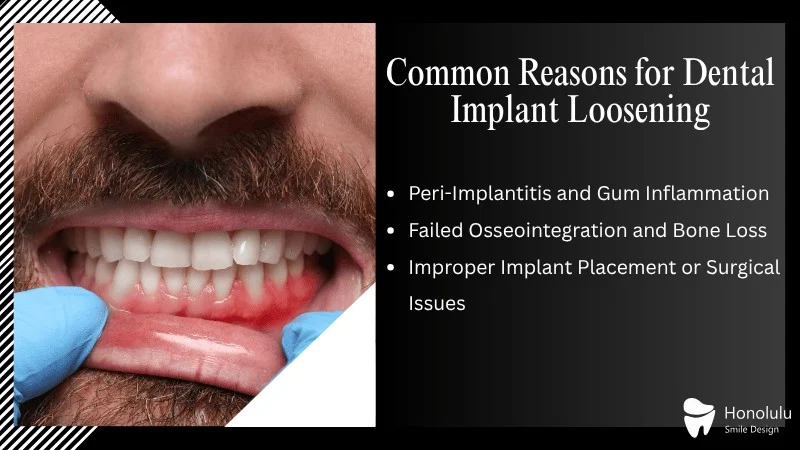
Peri-Implantitis and Gum Inflammation
Peri-implantitis is a serious infection around your implant. It starts with gum inflammation and can lead to bone loss if you ignore it.
You may notice red or swollen gums, bleeding when you brush, bad breath, or a bad taste in your mouth. As the infection spreads, the bone that supports your implant begins to shrink. This bone loss weakens the implant and can lead to dental implant failure.
Gum recession can also expose more of the implant surface. That makes it easier for bacteria to collect and harder for you to keep the area clean.
Risk factors include poor oral hygiene, smoking, and uncontrolled diabetes. If you treat peri-implantitis early, your dentist may clean the area deeply and use antibiotics. In advanced cases, you may need surgery or bone grafting to rebuild lost bone.
Failed Osseointegration and Bone Loss
Your implant must fuse with your jawbone in a process called osseointegration. When this process does not work, the implant never becomes fully stable.
Failed osseointegration can happen if you have low bone density, uncontrolled health conditions, or too much movement at the implant site during healing.
Without a strong bond between the implant and bone, the implant may feel loose soon after placement or months later.
Bone loss also plays a major role. Infection, pressure from grinding your teeth, or untreated gum disease can reduce bone support over time.
If the implant cannot bond to the bone, your dentist may need to remove it. After healing, you might need bone grafting before placing a new implant. This step helps create a stable base and lowers your risk of implant failure.
Improper Implant Placement or Surgical Issues
The position of your implant matters. Improper implant placement can place too much pressure on one area of bone, which leads to movement and long-term problems.
If the implant sits at the wrong angle, your bite may not align correctly. That uneven pressure can loosen the implant or damage surrounding bone.
In some cases, a loose feeling does not come from the implant itself. A loose crown or abutment screw can create movement even when the implant remains stable.
According to this guide on a loose dental implant and common causes, screw loosening is a known complication with single-tooth implants.
Surgical planning errors, limited bone volume, or skipping proper imaging can also raise your risk of dental implant failure. Careful placement and follow-up visits help protect your investment and keep your implant secure.
Contact us today for fast, accurate, and professional support.
Mechanical and Lifestyle Factors
Some loose implants happen because of daily habits or small hardware problems, not disease. Strong bite force, worn parts, or an injury can stress the implant and cause movement.
Teeth Grinding and Excessive Bite Force
If you grind your teeth at night, you place repeated pressure on your implant. This habit, called bruxism, can strain the implant, crown, and surrounding bone.
You may not notice it while sleeping. Signs include jaw pain, worn teeth, and morning headaches.
Constant grinding can lead to mechanical failure of the crown or abutment. Over time, the stress may loosen the screw or weaken the bond between parts.
Common risk factors include:
- Nighttime teeth grinding
- Clenching during stress
- Biting hard foods like ice or nuts
- Missing a night guard if one was prescribed
If you grind your teeth, your dentist may recommend a custom night guard. This device spreads out pressure and protects the implant from repeated force.
Abutment or Screw Loosening
Sometimes the implant post in your bone stays solid, but the top parts shift. In many cases, the issue involves a loose abutment screw or a loose abutment.
The abutment connects the implant post to the crown. A small abutment screw holds everything in place. If this screw loosens, the crown may wobble when you chew.
You might notice:
- A slight clicking sound
- Movement in the crown
- Discomfort when biting
This problem often results from wear, heavy bite force, or improper torque during placement. It is usually easier to fix than a failing implant post.
Your dentist can remove the crown, check the parts, and tighten or replace the screw. Do not try to tighten it yourself. You can damage the threads and make repair harder.
Trauma or Injury
A sudden hit to your mouth can loosen an implant. Falls, sports injuries, or car accidents can all cause damage.
Even biting down on a hard object can create enough force to shift parts. Unlike natural teeth, implants do not have a ligament that absorbs shock.
After trauma, you may notice:
- Immediate pain
- Swelling in the gums
- Visible movement in the crown
- Difficulty chewing
If you feel movement after an injury, contact your dentist right away. A loose dental implant should never be ignored because delay can lead to further damage.
Your dentist will take X-rays to check the bone and implant position. Quick care improves your chances of saving the implant.
Recognizing Signs and Symptoms
A loose implant rarely happens without warning. You can often spot small changes in movement, comfort, or gum health before the problem gets worse.
Movement, Pain, and Difficulty Chewing
You should not feel your implant move. If it shifts when you touch it with your tongue or bite down, something is wrong. The movement may come from a loose crown, screw, or the implant post itself.
Pain is another clear sign. Mild soreness right after surgery is normal, but pain months or years later is not. You may feel pressure when chewing or a dull ache that does not go away.
Difficulty chewing often shows up early. Food may feel uneven on that side of your mouth. You might avoid chewing there because it feels unstable or sore.
Pay attention to:
- A clicking or wobbling feeling
- Pain when biting
- New sensitivity to pressure
- A sense that the tooth is not secure
These signs affect your daily comfort and can harm your oral health if you ignore them.
Changes in Gum or Bite
Look closely at the gums around your implant. Healthy gums should look pink and firm. Redness, bleeding, or swelling can point to infection around the implant.
You may also notice gum recession. The gum pulls back and exposes more of the metal post or abutment. This change can make the area look longer than your natural teeth.
Your bite may shift as well. The implant might feel higher or lower than before. You could notice that your teeth no longer meet evenly when you close your mouth.
Watch for:
- Bleeding when brushing
- Puffy or tender gums
- A bad taste or odor
- Changes in how your teeth fit together
These changes often signal trouble with the surrounding bone or tissue.
Warning Signs That Need Urgent Attention
Some symptoms need fast care. Do not wait if you see pus, heavy swelling, or sharp pain that spreads to your jaw or face.
Call your dentist right away if you have:
- Facial swelling that lasts more than two days
- Persistent throbbing pain
- Fever along with gum inflammation
- Discharge from the implant site
These signs may point to a serious infection that can damage bone and weaken the implant. Quick treatment protects your oral health and lowers the risk of implant failure.
What to Do If Your Dental Implant Is Loose
A dental implant loose in your mouth needs quick and careful action. What you do next can protect your gums, bone, and the implant itself.
Immediate Actions at Home
Stay calm and avoid touching or wiggling the implant with your fingers or tongue. Movement can make bone loss or tissue damage worse.
Do not chew on that side of your mouth. Stick to soft foods like yogurt, eggs, or soup. Avoid hard, sticky, or crunchy foods.
Keep up strong oral hygiene, but be gentle. Brush with a soft toothbrush and clean around the area without pressing hard. If your gums feel sore, rinse with warm salt water to reduce irritation.
Do not try to tighten the crown or screw yourself. Do not use glue or home repair kits. A guide on how to fix a loose dental implant explains that movement can signal bone loss, infection, or a loose part that needs professional care.
If you feel pain, swelling, or notice bleeding, treat it as urgent.
When to Contact Your Dentist
Call your dentist as soon as you notice the implant feels loose. Do not wait for your next routine dental check-ups.
Ask for an appointment within a few days. If you have severe pain, pus, fever, or facial swelling, request emergency dental care the same day.
Your dentist will take X-rays to check the bone and implant. They will also test if the crown, abutment, or the implant post is moving. In many cases, the issue is a loose crown or screw, which they can tighten.
If the implant post is unstable, the dentist may check for infection or bone loss.
Quick treatment lowers the risk of full implant failure and protects your long-term oral health.
How Dentists Diagnose and Treat Loose Implants
When your implant feels loose, your dentist focuses on finding the exact cause before starting treatment. They check the crown, the screw, the bone, and the gums to protect your implant stability and your long-term tooth replacement.
Professional Evaluation and Imaging
Your dentist starts with a hands-on exam. They gently test the dental implant crown to see if only the crown moves or if the implant post inside the bone shifts too.
Many loose implants are actually loose crowns or screws. In fact, a loose dental implant is often caused by a loose screw, crown, or abutment rather than the implant itself.
Your dentist will also take X-rays. These images show:
- Bone levels around the implant
- Signs of bone loss
- Infection near the root area
- Cracks or damage to parts
They may check your bite as well. Uneven pressure from grinding or a poorly aligned crown can reduce implant stability over time.
Early diagnosis matters. Dental implants have about a 95% success rate, but problems need quick care to stay that way.
Repairing or Replacing Loose Components
If only the crown feels loose, the fix is often simple. Your dentist can tighten or replace the small screw that holds the dental implant crown in place.
If the crown came off completely, they may clean it and cement it back on. When the crown is damaged, they may recommend a new one to protect your tooth replacement.
If the abutment—the connector between the implant and crown—moves, your dentist can remove the crown, tighten the abutment, and secure everything again.
These repairs are usually quick. They do not involve removing the implant from the bone.
Prompt care prevents added stress on nearby teeth or dental bridges. It also protects the bone that supports your implant.
Treating Infections, Bone Loss, or Implant Failure
If your dentist finds swelling, bleeding gums, or bone loss on X-ray, infection may be the cause. Bacteria can build up around implants and damage the tissue.
Treatment may include:
- Deep cleaning around the implant
- Special tools to remove bacteria
- Antibiotics in some cases
When bone loss is more advanced, your dentist may recommend bone grafting. This adds new bone material to rebuild support before saving or replacing the implant.
If the implant itself moves inside the bone, it has likely failed. In that case, removal is often required. Some clinics explain that advanced cases may need full replacement, including bone repair.
After healing, you may receive a new implant or another tooth replacement option for missing teeth.
Prevention Strategies for Long-Term Implant Success

You protect your implant by caring for it every day. Brush twice daily and floss carefully around the crown and gumline.
Regular dental visits matter just as much. Your dentist checks for early bone changes, loose parts, or bite problems before you feel symptoms.
You should also:
- Avoid smoking
- Wear a night guard if you grind your teeth
- Avoid chewing hard objects like ice
Good oral hygiene lowers your risk of infection. Routine exams help maintain implant stability and protect the bone that supports your replacement tooth.
Simple daily habits help your implant stay secure for many years.
Frequently Asked Questions
A loose dental implant can involve the crown, the abutment, or the implant post in your jaw. The cause and the next step depend on which part is moving and whether you have pain, swelling, or bone loss.
What are the most common reasons a dental implant starts to feel loose?
In many cases, the implant post is still stable and only the top part is loose. The crown can loosen from sticky foods, heavy biting, or a hit to the mouth.
The small connector piece, called the abutment, can also loosen. This often happens after minor trauma or long-term bite pressure.
A loose implant post is less common but more serious. Gum disease, infection, or bone loss around the implant can cause the post to lose support.
How can I tell if it’s the implant itself or just the crown thats loose?
If only the crown moves while the gum and implant base feel firm, the problem is often limited to the top portion. You may notice slight movement when you chew, but no deep pressure in the jaw.
If the entire implant shifts at the gum line, or you feel movement deeper in your jaw, the implant post may be unstable. That needs prompt dental care.
Your dentist may take an X-ray to check the bone around the implant. This confirms which part is loose.
What symptoms should I watch for if my implant crown feels wobbly?
Pay attention to clicking, shifting when you bite, or food getting trapped around the crown. These signs often point to a loose crown or screw.
Watch for swelling, bleeding gums, or a bad taste. These signs can mean infection around the implant.
Pain is not always present. Even without pain, movement is not normal and should not be ignored.
Can a slightly moving dental implant be saved, and what affects the outcome?
Yes, many loose implants can be treated, especially if the issue is limited to the crown or abutment. A dentist can often tighten or replace the loose part.
If the implant post has lost bone support, the outcome depends on how much bone remains. Early treatment improves your chances.
Your general health, gum condition, and oral hygiene also affect healing. Smoking and untreated gum disease lower success rates.
What should I do right away if my implant feels loose but doesn’t hurt?
Call your dentist in Honolulu and schedule an exam as soon as possible. Even without pain, movement signals a problem.
Avoid chewing on that side of your mouth. Do not try to tighten the implant yourself.
Keep the area clean with gentle brushing and rinsing. Fast action helps prevent further damage.
Why does the implant screw keep coming loose, and can it be tightened?
The implant screw can loosen from bite pressure, teeth grinding, or a crown that does not fit well. Small changes in your bite over time can also stress the screw.
In many cases, your dentist can tighten the screw and secure the crown again.
If the screw loosens more than once, your dentist may adjust your bite or replace worn parts. This helps reduce repeated stress on the implant.