Many people avoid getting dental implants because they worry about pain. The good news is that the procedure itself is not painful, and any discomfort afterward is usually mild and short-lived.
During the dental implant procedure, you won’t feel pain because your dentist will use local anesthesia to numb the treatment area completely.
You might notice some pressure or vibration, but these sensations are not painful. If you feel anxious about the surgery, sedation options are available to help you stay relaxed and comfortable throughout the process.
After the surgery, some soreness and swelling are normal as your mouth heals. Most patients report that discomfort peaks within the first 48 to 72 hours and improves quickly with basic pain management.
Understanding what happens before, during, and after your procedure can help you feel more confident about moving forward with treatment.
Key Takeaways
- Dental implant surgery is painless during the procedure because of local anesthesia and sedation options
- Post-surgery discomfort is typically mild and manageable with over-the-counter pain relievers and proper care
- Most patients experience minimal pain within one to two weeks after the procedure
Worried About Pain? Learn the Truth About Dental Implants
Are Dental Implants Painful? The Truth About Pain During Surgery
During the actual implant placement, you won’t feel pain because your dentist uses local anesthesia to numb the treatment area completely. What you might notice are sensations of pressure or movement, but these aren’t painful.
Will You Feel Pain During Implant Surgery?

No, you should not feel pain during dental implant surgery. Your dentist will use local anesthesia to numb your jaw and gums before starting the procedure.
The numbing medication blocks pain signals from reaching your brain. This means the area where the implant goes stays completely numb throughout the surgery. You’ll be awake and aware, but you won’t experience pain.
If you feel anxious about the procedure, your dentist can offer sedation options. These help you relax while the local anesthesia handles pain control. Some patients choose oral sedation pills, while others prefer IV sedation for deeper relaxation.
Sensation Versus Pain: What You’ll Actually Notice
During implant placement, you’ll likely feel pressure and vibration. These sensations are normal and very different from pain.
The pressure comes from your dentist working on your jaw. You might feel pushing or pulling as they prepare the site and place the titanium post. Some patients also notice vibrations from the dental tools.
These feelings can seem odd or uncomfortable, but they shouldn’t hurt. If you do feel sharp pain during the procedure, tell your dentist right away. They can add more anesthetic to keep you comfortable.
Do Dental Implants Hurt Compared to Other Dental Procedures?
Most patients report that dental implant surgery feels similar to having a tooth pulled, but often with less discomfort afterward. The procedure is typically less painful than a tooth extraction because of modern techniques.
Root canals and wisdom tooth removal often cause more post-procedure discomfort than dental implants. With implant dentistry, the surgical site is usually smaller and more precise.
Your experience also depends on how many implants you’re getting. A single implant causes minimal disruption to your mouth. Multiple implants in one visit may lead to more soreness, but the pain during surgery itself remains the same; none, thanks to anesthesia.
Book your appointment today and take the first step toward a pain-free, lasting smile.
Anesthesia and Sedation Options for Comfort
Your dental team offers multiple ways to keep you comfortable during implant surgery, from simple numbing medication to deeper sedation levels. The right choice depends on your anxiety level, the complexity of your procedure, and your personal preferences.
Local Anesthesia Explained
Local anesthesia numbs the treatment area and blocks pain signals from reaching your brain during your dental implant procedure. Your dentist injects this medication directly into your gums around the surgical site.
You’ll stay fully awake and aware during the surgery, but you won’t feel any sharp or cutting sensations.
The numbing typically takes just a few minutes to work. You might feel a small pinch when the needle goes in, but that’s usually the only discomfort you’ll experience.
Most patients only need local anesthesia for dental implant surgery. You’ll notice pressure and pushing as your dentist works, but these sensations shouldn’t hurt.
If you do feel pain during the procedure, tell your dentist right away so they can add more numbing medication to keep you comfortable.
Sedation Dentistry Choices
Oral sedation involves taking a pill before your appointment to help you feel relaxed and calm. You’ll remain conscious throughout the procedure but may feel drowsy and less aware of what’s happening.
This option works well for patients with mild to moderate dental anxiety.
IV sedation delivers medication through a vein and creates a deeper state of relaxation than oral sedation. You’ll be in a twilight state where you’re technically conscious but may not remember much about the surgery afterward.
Nitrous oxide, also called laughing gas, helps you feel relaxed while staying fully awake. Your dentist administers it through a mask you wear over your nose. The effects wear off quickly after the mask comes off, so you can usually drive yourself home.
These sedation options for dental implants are always combined with local anesthesia to ensure you don’t feel pain.
General Anesthesia for Dental Implants
General anesthesia puts you completely asleep during surgery, and it’s rarely needed for standard dental implant procedures.
Your dentist might recommend it if you’re having multiple implants placed at once, need extensive bone grafting, or have severe dental anxiety that other sedation methods can’t manage.
You’ll need to have general anesthesia performed in a hospital or surgical center with an anesthesiologist present. This option requires the most preparation, including fasting before surgery and arranging for someone to drive you home.
The recovery from general anesthesia takes longer than other options. You may feel groggy or nauseous for several hours after waking up.
Contact us today to speak with our dental team and get personalized guidance.
What to Expect After Dental Implant Surgery
After dental implant surgery, you’ll experience some discomfort and swelling as your body begins the healing process. Most people find that symptoms peak within the first few days and gradually improve over the following weeks as osseointegration takes place.
Typical Pain and Discomfort Right After Surgery
You won’t feel any pain during the actual procedure because of anesthesia. However, once the numbness wears off, you can expect some achiness around the implant site.
Post-operative pain is typically mild to moderate and feels similar to the discomfort after a tooth extraction. The first 24 to 48 hours usually bring the most noticeable sensations.
Most patients describe the feeling as a dull throb rather than sharp pain. You might also notice some sensitivity when your tongue or cheek brushes against the area. This is completely normal and shows your body is responding to the surgery.
Your dentist will likely prescribe pain medication or recommend over-the-counter options. Many people find that ibuprofen or acetaminophen is enough to keep them comfortable during the initial recovery period.
Managing Tender Gums and Swelling
Your gums will feel tender and may appear puffy after dental implant surgery. Swelling typically peaks around day three and then starts to go down.
Applying ice packs to your cheek for 15 minutes at a time can help reduce swelling. Keep your head elevated when lying down to prevent fluid from pooling in the surgical area.
Common symptoms include:
- Redness around the implant site
- Mild bruising on the gums or face
- A feeling of tightness in your jaw
- Minor bleeding that stops with gentle pressure
Rinse gently with warm salt water starting 24 hours after surgery. Avoid touching the area with your fingers or tongue, even though it might feel tempting. Managing tender gums requires patience and following your dentist’s care instructions closely.
Post-Operative Healing Timeline
Your recovery happens in stages over several months. The first week focuses on soft tissue healing and managing initial swelling.
By week two, you should feel mostly back to normal. The tenderness decreases significantly, and you can start eating a wider variety of soft foods.
The real healing happens beneath the surface during osseointegration. This process takes three to six months as your jawbone fuses with the titanium implant post.
| Timeline | What’s Happening |
| Days 1-3 | Peak swelling and discomfort |
| Week 1-2 | Soft tissue healing, reduced pain |
| Weeks 2-6 | Gums close around implant |
| Months 3-6 | Bone integration completes |
You’ll have follow-up appointments to monitor your progress. Once osseointegration is complete, your dentist will attach the permanent crown. During this entire period, proper care and avoiding hard foods on that side helps ensure successful healing.
Pain Management Tips for a Smooth Recovery
Managing your pain properly after dental implant surgery helps you heal faster and feel more comfortable. The right combination of medication, home care, and knowing when to seek help makes recovery much easier.
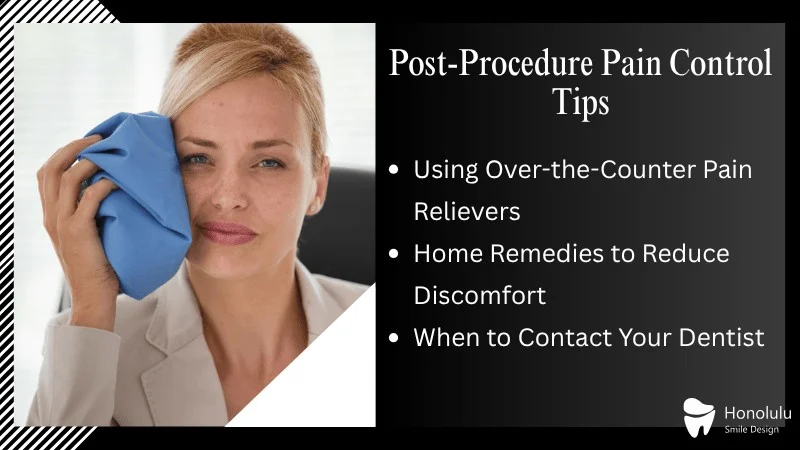
Using Over-the-Counter Pain Relievers
Over-the-counter pain relievers work well for most people after dental implant surgery. Ibuprofen is often the best choice because it reduces both pain and swelling at the same time.
You can take 400-600mg of ibuprofen every six to eight hours as needed. Always follow the dosage instructions on the bottle and don’t exceed the maximum daily amount.
If you can’t take ibuprofen, acetaminophen is another good option. It helps with pain but doesn’t reduce swelling as much. Some dentists recommend alternating between ibuprofen and acetaminophen for better pain control.
Take your pain medication:
- Before the numbness wears off completely
- With food to avoid stomach upset
- On a regular schedule for the first 48 hours
- Exactly as your dentist prescribed
Your dentist may prescribe stronger medication if you have multiple implants placed or a complex procedure. Never mix prescription pain medication with alcohol.
Home Remedies to Reduce Discomfort
Ice packs are one of the most effective home remedies for dental implant pain management. Apply ice to your cheek for 15-20 minutes at a time during the first two days after surgery.
Wrap the ice pack in a thin towel to protect your skin. Use ice every few hours while you’re awake to keep swelling down.
Salt water rinses help keep your mouth clean and reduce inflammation. Mix half a teaspoon of salt in a cup of warm water and rinse gently three to four times daily. Start using salt water 24 hours after your surgery, not right away.
Keep your head elevated when you sleep or rest. Use two or three pillows to prop yourself up, which reduces blood flow to the surgical area and minimizes swelling.
When to Contact Your Dentist
Call your dentist right away if your pain gets worse instead of better after the first week. Increasing pain that doesn’t respond to medication may signal a problem.
You should also contact your dentist if you develop a fever over 101°F. A fever often means your body is fighting an infection that needs treatment.
Contact your dentist immediately if you notice:
- Pus or yellow discharge from the implant site
- Bleeding that won’t stop after 30 minutes of pressure
- Severe swelling that affects your breathing or swallowing
- A foul taste or smell that doesn’t go away with rinsing
- Your implant feels loose when you touch it with your tongue
Don’t wait to see if these symptoms go away on their own. Quick action prevents small problems from becoming serious complications.
Special Situations: Bone Grafts and Sinus Lifts
Some dental implant patients need extra procedures to build up their jawbone before implants can be placed. Both bone grafts and sinus lifts add bone material to create a strong foundation, but they address different problems in different areas of your mouth.
Understanding Bone Graft Procedures
A bone graft rebuilds missing or weak areas in your jawbone. You might need one if you’ve had teeth missing for a long time, experienced bone loss from gum disease, or suffered jaw damage from an injury.
During a bone graft procedure, your oral surgeon places bone material in the area that lacks enough support. The material can come from several sources:
- Autograft: Your own bone from another part of your body
- Allograft: Donated human bone tissue
- Xenograft: Bone from an animal source
- Synthetic: Lab-created bone material
Your body gradually replaces this graft material with your own natural bone over 4-6 months. Common types include socket preservation done right after tooth removal, ridge augmentation to restore jaw width and height, and block grafts for larger missing sections.
The discomfort during recovery is typically mild and manageable with pain medication.
What is a Sinus Lift?
A sinus lift is a specialized bone graft for your upper jaw. You need this procedure when there isn’t enough bone height between your upper jaw and the maxillary sinus cavity above your back teeth.
Your surgeon creates a small opening in the bone, gently lifts the sinus membrane upward, and fills the space underneath with bone graft material. This creates the extra height needed for implants in your upper molars or premolars.
The healing time is usually 6-9 months before your jawbone is ready for implants. In some cases, your surgeon can place the implant during the same appointment as the sinus lift.
You’ll experience similar recovery symptoms as other bone grafts, including mild swelling and soreness for the first few days. The procedure requires precision, but choosing an experienced oral surgeon reduces risks like membrane tears or infection.
Long-Term Comfort and What Affects Your Experience
Most dental implants feel completely natural after healing, but your long-term comfort depends on proper placement, healthy integration, and quality restorative work. Several factors influence how comfortable your implant feels years after surgery.

Implant Placement and Healing Success
The way your oral surgeon positions the titanium post affects your comfort for years to come. Precise placement ensures the implant integrates properly with your jawbone through a process called osseointegration.
This healing period typically takes three to six months. During this time, bone cells grow around the titanium post and hold it firmly in place.
Factors that support successful healing include:
- Adequate bone density at the implant site
- Good oral hygiene during recovery
- Avoiding smoking and excessive alcohol
- Following your dentist’s post-surgery instructions
- Managing conditions like diabetes that can slow healing
When osseointegration succeeds, your implant should feel stable and comfortable. You shouldn’t notice any difference between your natural teeth and the implant during normal activities like eating or speaking.
Recognizing Implant Failure and Unusual Pain
While dental implants have high success rates, sometimes problems develop. Persistent pain, swelling, or discomfort months after surgery isn’t normal and may signal implant failure.
Warning signs to watch for:
- Increased pain rather than improvement
- Looseness or movement of the implant
- Swelling or redness around the implant site
- Difficulty chewing on that side
- Pus or drainage near the implant
If you experience these symptoms, contact your dentist right away. Early intervention can sometimes save the implant or prevent further complications.
Infections around the implant, called peri-implantitis, require prompt treatment to protect surrounding bone and tissue.
The Role of Restorative Dentistry in Ongoing Comfort
After your titanium post heals, your dentist attaches an abutment and dental crown to complete the restoration. The quality of this restorative work directly impacts your daily comfort.
A properly fitted abutment connects smoothly to your implant without gaps where bacteria can collect. Your dental crown should match your bite perfectly so you don’t experience uneven pressure when chewing.
Poor crown fit can cause discomfort, tooth sensitivity, or jaw pain over time. Your dentist may need to adjust the crown’s shape or bite alignment to eliminate these issues.
Regular dental checkups help catch small problems before they affect your comfort or the implant’s longevity.
Frequently Asked Questions
Most people feel the worst discomfort around 48 hours after surgery, and pain during the procedure itself is rare thanks to anesthesia. Recovery soreness typically fades within a few days to a week for most patients.
What is the most painful day after dental implant surgery?
The second day after surgery is usually when you’ll feel the most discomfort. Swelling and tenderness typically peak around 48 hours after your procedure.
This doesn’t mean the pain will be severe. Most patients describe it as manageable with over-the-counter pain medication.
After the 48-hour mark, you should start feeling better each day. If your pain gets worse instead of better after the third day, contact your dentist.
How much pain should I expect during the dental implant procedure?
You shouldn’t feel pain during the actual surgery because the area is fully numbed with local anesthesia. Many patients don’t remember much of the procedure at all.
You might feel some pressure or hear sounds during the implant placement. These sensations are normal and not a sign that something is wrong.
Your dentist can also offer sedation options if you’re anxious about the procedure. This helps you stay relaxed and comfortable throughout the surgery.
How long does soreness usually last after getting a dental implant?
Most patients experience tenderness for a few days after getting a dental implant. The discomfort responds well to over-the-counter pain relievers like ibuprofen.
For many people, the soreness is milder than what they felt after a tooth extraction. You’ll likely notice improvement each day during the first week.
Some mild sensitivity can last up to two weeks as your gums heal. This is normal as long as the pain is decreasing rather than increasing.
What are the warning signs that dental implant pain isn’t normal?
Pain that gets worse after the first few days instead of better needs attention. You should call your dentist if this happens.
Watch for severe pain that doesn’t respond to medication. Other warning signs include fever, excessive swelling that spreads, pus or discharge from the implant site, and a bad taste in your mouth.
Numbness that lasts more than a few hours after the anesthesia should wear off is also a concern. These symptoms could indicate an infection or other complication that needs treatment.
Why might a dental implant start hurting years later?
An implant that hurts years after placement could mean the bone around it is deteriorating. This condition is called peri-implantitis and happens when bacteria cause inflammation.
Poor oral hygiene is the most common cause of late implant problems. Gum disease can also spread to the tissue around your implant.
Sometimes the implant becomes loose due to excessive force from grinding your teeth or biting hard foods. A dentist needs to examine the implant to determine what’s causing the pain and how to fix it.
What are the pros and cons I should know before deciding on dental implants?
Dental implants look and function like natural teeth and can last a lifetime with proper care. They don’t require grinding down adjacent teeth like bridges do, and they help preserve your jawbone.
The main downsides are cost and treatment time. Implants are more expensive than other tooth replacement options, and the full process can take several months from start to finish.
The surgery also carries small risks like any medical procedure. Some people aren’t good candidates if they have certain health conditions or insufficient jawbone density.