Waking up with a sore jaw or an ache near your ear can be confusing, especially when you don’t remember doing anything to cause it.
If a partner has mentioned that you grind your teeth at night, you’re not alone, and you’re not doing anything wrong.
Sleep bruxism, the medical term for grinding or clenching your teeth while you sleep, is a common condition that often ties back to stress, but it can have several other causes too.
Stress can tighten the muscles in your jaw without you noticing, and that tension often follows you into sleep.
So, if you are considering bruxism treatment in Honolulu, the first step is understanding what may be causing the grinding and whether it is affecting your teeth, jaw, or sleep.
This condition can affect anyone, from young children losing their first teeth to adults with decades of dental work to protect.
Knowing the signs early can help you avoid bigger problems with your teeth, jaw joint, and sleep quality down the road.
Key Takeaways
- Stress is a common trigger for jaw clenching and teeth grinding, but sleep disorders, genetics, and certain habits can play a role too.
- Left unchecked, grinding can wear down teeth, damage dental work, and strain the jaw joint over time.
- A custom guard protects your teeth, but coordinated care with a dentist, physician, or sleep specialist matters when snoring or breathing pauses are part of the picture.
Could Your Morning Symptoms Be Sleep Bruxism?
Morning jaw soreness, headaches, and tooth sensitivity are common signs that you may be clenching or grinding your teeth while you sleep.
These symptoms show up after the grinding has already happened, which is part of what makes sleep bruxism tricky to catch on your own.
The Difference Between Awake Bruxism and Sleep Bruxism
Awake bruxism happens when you clench your jaw during the day, often without realizing it while concentrating, driving, or feeling stressed.
Sleep bruxism happens involuntarily while you’re asleep and can place repeated pressure on the teeth and jaw because you cannot consciously relax the muscles.
Awake bruxism is actually more common, but sleep bruxism tends to cause more physical damage because you can’t consciously ease up on the pressure.
Signs a Dentist May See Before You Notice a Problem
Dentists often spot the early signs of grinding before patients feel any pain at all. These include flattened or worn tooth edges, small cracks in enamel, and tooth sensitivity that wasn’t there before.
A dentist may also notice indentations along the tongue or cheek, which can point to clenching habits during the day or night.
Catching these signs early can help prevent more serious dental damage, similar to how routine steps to avoid tooth decay help catch small issues before they grow.
When Jaw Pain, Earache, and Headaches Point to Clenching
Jaw pain, earache, and morning headaches together often point toward nighttime clenching, especially when they show up soon after waking.
The muscle tension from grinding can radiate outward, causing neck pain and a dull ache near the ear that feels like an earache but isn’t related to an ear infection.
Why Stress Is Only One Trigger for Teeth Grinding
Stress is a major contributor to teeth grinding, but it works alongside other physical and lifestyle factors that can trigger or worsen the habit.
Sleep disorders, certain substances, medications, and even genetics all play a part in whether someone grinds their teeth at night.
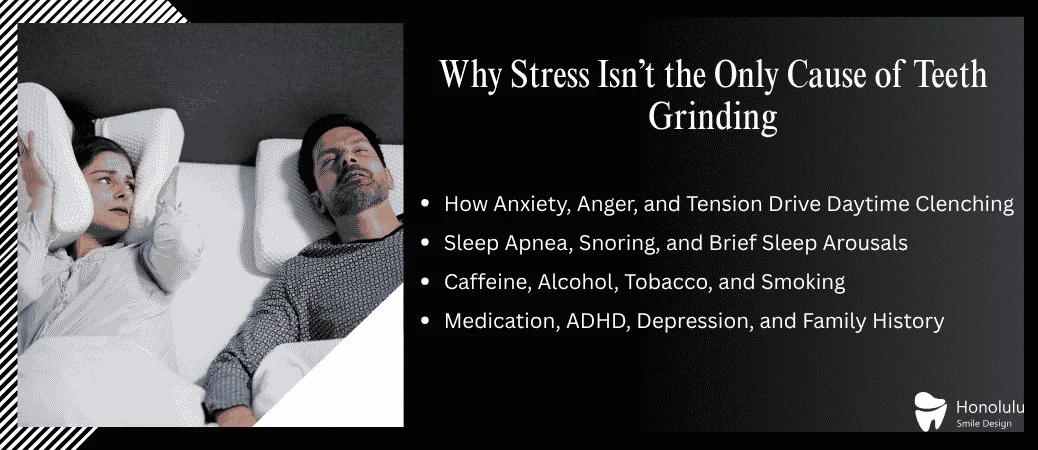
How Anxiety, Anger, and Tension Drive Daytime Clenching
Anxiety, anger, and built-up tension often show up physically as a tightened jaw before you’re aware of feeling stressed.
This reaction ties to your body’s fight-or-flight response, which can stay active even after the stressful moment has passed.
Daytime clenching can carry over into sleep without you realizing it. Practicing stress management, like deep breathing or short breaks during a busy workday, can ease that muscle tension before bedtime.
Sleep Apnea, Snoring, and Brief Sleep Arousals
Obstructive sleep apnea (OSA), a condition where breathing repeatedly stops and starts during sleep, has a documented connection to sleep bruxism.
Episodes of grinding often follow brief increases in brain and heart activity called microarousals, which can happen when breathing is interrupted.
Snoring and disrupted sleep are common companions to this pattern. If you snore loudly or wake up feeling unrefreshed, it’s worth mentioning to your dentist and physician together.
Caffeine, Alcohol, Tobacco, and Smoking
Caffeine, alcohol, and tobacco use have all been linked to a higher chance of grinding your teeth at night. These substances can affect sleep depth and muscle relaxation, making grinding episodes more likely for some people.
Cutting back doesn’t guarantee grinding will stop, but it’s one variable worth adjusting if you’re looking for relief alongside other treatment.
Medication, ADHD, Depression, and Family History
Certain medications, including SSRIs (a common type of antidepressant) and amphetamines used for ADHD, have been associated with increased bruxism risk.
Depression itself is also linked to teeth grinding, independent of medication use.
Family history may also play a role in sleep bruxism. If teeth grinding runs in your family, mention it during your dental evaluation along with any medications you take.
How Bruxism Can Affect Your Teeth, Jaw, and Sleep
Ongoing teeth grinding can wear down enamel, damage dental work, and strain the jaw joint over months and years.
The extent of the damage depends on how often and how hard you grind, along with your bite alignment and any existing dental work.

From Worn Enamel to Cracks, Cavities, and Tooth Loss
Grinding gradually wears away the protective enamel layer, exposing more sensitive layers of the tooth underneath.
Over time, this can lead to tooth sensitivity, gum recession, cracks, and a higher risk of cavities.
In more severe cases, teeth can become mobile or require a root canal to save a badly damaged tooth. Left untreated long enough, grinding can even contribute to tooth loss.
When Grinding Contributes to TMJ Symptoms
Grinding can strain the temporomandibular joints (TMJ), the hinges that connect your lower jaw to your skull.
This strain can lead to chronic jaw pain, clicking or popping sounds, and in some cases, a jaw that feels like it’s catching or locking.
Not everyone who grinds develops TMJ symptoms, but the risk increases with the frequency and force of grinding episodes.
Why Crowns, Fillings, and Other Dental Work Can Fail
Dental crowns, fillings, and other restorations are built to handle normal chewing forces, not the extra pressure of grinding. Repeated grinding can crack a crown, loosen a filling, or wear down dental work faster than expected.
If you’ve invested in restorative work, protecting it from grinding damage helps it last.
This is especially relevant for anyone considering a full mouth reconstruction, since new dental work needs the same protection as natural teeth.
How Honolulu Dentists and Sleep Specialists Manage Bruxism
Bruxism management starts with an evaluation of your teeth, jaw, and sleep habits, followed by a plan tailored to what’s driving your grinding.
Treatment often combines dental protection with lifestyle changes, and sometimes a referral to a sleep specialist when breathing issues are suspected.
At Honolulu Smile Design, Dr. John Ha, DDS brings extensive training in restorative dentistry and sleep apnea treatment when evaluating patients with teeth grinding, jaw discomfort, tooth wear, or possible sleep-related concerns.
What Happens During a Bruxism Evaluation
A dental care check up can include checking for worn tooth surfaces, jaw tenderness, and signs of muscle tension around your face and neck.
This conversation helps determine whether your grinding is likely stress-related, tied to a sleep-breathing problem, or influenced by another factor.
Night Guards and Dental Splints: What They Can and Cannot Do
A custom night guard (also called a dental splint or mouthguard) creates a barrier between your upper and lower teeth to reduce wear from grinding.
It protects your teeth and dental work, but it doesn’t stop the underlying muscle activity that causes grinding, and it doesn’t diagnose or treat sleep apnea.
| Device | Main Purpose | Diagnoses Sleep Apnea? |
| Night guard / dental splint | Protects teeth from grinding damage | No |
| Mandibular advancement device (MAD) | Repositions lower jaw to ease snoring | No |
| Polysomnography (sleep study) | Diagnoses sleep disorders including OSA | Yes |
Over-the-counter guards exist, but a custom-fitted version from your dentist tends to be more comfortable and durable for regular use.
When a Sleep Study or Mandibular Advancement Device May Help
When sleep apnea or another sleep disorder is suspected, a physician may recommend a sleep study.
This overnight evaluation can monitor breathing and other sleep-related activity to help determine whether a sleep disorder is contributing to your symptoms.
If OSA is diagnosed, a mandibular advancement device (MAD) may be recommended to hold your lower jaw slightly forward, which can ease snoring and reduce breathing interruptions.
At-Home Habits That Reduce Jaw Tension
Simple daily habits can ease jaw tension alongside professional treatment. A few worth trying:
- Practice deep breathing, meditation, or yoga to lower overall stress
- Keep a regular sleep schedule to support better sleep hygiene
- Apply a warm compress to sore jaw muscles before bed
- Avoid chewing gum or biting on hard objects during the day
These habits won’t replace a custom guard or medical treatment, but they can reduce how often clenching happens in the first place.
Protecting Your Smile Starts With Finding the Trigger

Protecting your smile from grinding damage starts with figuring out what’s driving it, whether that’s stress, a sleep-breathing problem, or another factor entirely.
A dentist can spot early wear on your teeth and help you decide whether stress reduction, a custom guard, or a referral for further sleep evaluation makes the most sense for your situation.
Sleep bruxism doesn’t have to mean a lifetime of dental damage. With the right combination of dental care and, when needed, sleep specialist input, treatment can focus on reducing symptoms and protecting your teeth from further damage.
If you’re already noticing worn or sensitive teeth, it helps to catch small issues before they grow, much like the guidance in maintaining proper oral health. A conversation with your dentist is a practical first step toward relief.
Frequently Asked Questions
Does stress cause you to grind your teeth in your sleep?
Stress is one of the most common triggers for sleep bruxism, since it can keep jaw muscles tense even after you fall asleep.
Not everyone under stress grinds their teeth, though, so other factors like sleep apnea, genetics, or medication use may also be involved.
How can I stop clenching my jaw during the day?
Noticing when you clench, often during focused tasks or stressful moments, is the first step toward breaking the habit.
Relaxation techniques like deep breathing, taking short breaks, and being mindful of jaw position throughout the day can help reduce daytime clenching.
Can a night guard stop sleep bruxism or only protect teeth?
A night guard protects your teeth from grinding damage, but it doesn’t stop the muscle activity that causes grinding itself.
Managing the underlying cause, whether that’s stress or a sleep disorder, works alongside a guard for the best long-term results.
When should teeth grinding be checked for sleep apnea?
Teeth grinding paired with loud snoring, gasping during sleep, or feeling exhausted despite a full night’s rest is worth discussing with your dentist or physician.
If sleep apnea is suspected, a sleep study may be recommended to evaluate your breathing and other activity during sleep.
Why does a child grind their teeth at night?
Childhood teeth grinding is fairly common and may be associated with normal jaw development, stress, or other sleep behaviors.
A dentist can check for tooth wear and help determine whether monitoring or further evaluation is appropriate.