If your dentures slip when you laugh, click when you chew, or need another dab of adhesive just to get through lunch, you are not imagining the problem.
Loose dentures are one of the most common complaints among denture wearers, and the discomfort tends to build slowly until one day it is hard to ignore.
The good news is that you have more than one path forward.
If you are looking for a loose dentures fix, the right solution depends on why the fit has changed. Some problems are simple to correct with a reline or adjustment.
Others point to something bigger happening underneath the surface, changes in your jawbone that a soft liner or extra adhesive cannot solve.
Understanding the difference between a minor denture fit issue and a sign that your jawbone has changed can help you make a confident, informed decision about your next step.
For some people, that next step is implant-retained dentures. For others, well-maintained traditional dentures still do the job.
This article walks through the signs worth watching, why dentures loosen in the first place, and what implant options look like if you decide to explore them.
Key Takeaways
- Slipping, sore spots, and heavy adhesive use often signal jawbone changes, not just a worn-out denture.
- Implant-retained dentures come in several forms, from removable snap-in styles to fixed full-arch designs, each with different costs and care needs.
- A qualified implant dentist or prosthodontist needs to evaluate your bone density, gum health, and medical history before recommending any treatment plan.
Signs Your Dentures Need More Than an Adjustment
Some denture problems clear up with a quick visit to your dentist. Others stick around no matter how many adjustments you try, and that pattern is worth paying attention to.
Removable dentures naturally shift a bit throughout the day, but conventional dentures and partial dentures that move constantly, cause pain, or affect how you eat and talk are sending you a message about your gum tissue, bite force, or oral health.
Slipping, Clicking, and Rocking During Meals
Dentures that slide, click, or rock while you eat usually mean the fit no longer matches the shape of your gums.
This is one of the most common complaints among denture wearers, and it often shows up gradually rather than all at once.
If it happens with nearly everything you eat, not just sticky or hard foods, that is a stronger signal that the base of the denture has stopped matching your mouth.
Sore Spots and Ongoing Gum Irritation
Sore spots that keep coming back, even after an adjustment, point to pressure points that shift as your gum tissue and jawbone change shape.
A denture that fit well a year ago can start rubbing in new places once the tissue underneath it shrinks. Recurring irritation is one of the clearest signs that a simple polish or trim will not solve the deeper issue.
Relying on More Denture Adhesive Than Before
Needing more denture adhesive than you used to, or reapplying it several times a day, usually means the natural suction between your denture and gums has weakened.
Adhesive can mask a fit problem for a while, but it does not fix the underlying change in your gum ridge.
If you find yourself buying adhesive more often just to keep your denture from moving, that is worth mentioning at your next dental visit.
Changes in Speech Clarity and Confidence
A denture that shifts while you talk can affect speech clarity, causing slurring, clicking sounds, or a whistle you did not have before.
Many people notice this before they notice the physical slipping, since speech changes tend to happen in front of other people.
Feeling like you have to talk carefully or avoid certain words is a sign the fit has changed.
When a Reline May Still Be Enough
A reline adds new material to the inside of your denture base and can restore a comfortable fit if the change in your jaw is mild.
This is often enough for wearers whose dentures are still in good shape but have started to feel a little loose.
If relines stop holding for very long, or you need one every few months, that usually means the bone loss underneath has progressed further than a reline can accommodate.
Why Dentures Become Loose Over Time
Dentures loosen mainly because the jawbone underneath them keeps changing shape long after teeth are gone.
This is a normal biological process, not a sign that you did anything wrong or that your dentures were made poorly.
How Tooth Loss Changes the Jawbone
Tooth loss removes the stimulation your jawbone needs to maintain its density and shape.
Natural tooth roots send pressure signals into the bone every time you bite or chew, and that pressure tells the body to keep rebuilding bone in that area.
Once the teeth and roots are gone, that signal disappears, and the bone starts to change.
Bone Resorption and the Changing Denture Fit
Bone resorption is the gradual loss of bone volume that happens after tooth loss, and it is the main reason dentures stop fitting the way they used to.
Traditional dentures rest on top of the gum and bone rather than replacing the tooth root, so they cannot stop this process.
Some fitting experts describe the denture base acting like a “shock absorber” that the bone gradually breaks down under. As the bone shrinks, the denture that once fit snugly starts to rock and slide.
How Worn Dentures and an Uneven Bite Add to the Problem
Worn denture teeth and an uneven bite speed up the fit problems caused by bone loss.
When the biting surfaces of a denture wear down unevenly, pressure gets distributed unevenly across the jaw, which can accelerate bone changes in some areas more than others.
Traditional dentures typically need remaking every several years partly for this reason.
Facial Changes Linked to Ongoing Bone Loss
Ongoing bone loss can lead to visible facial changes, including a sunken look around the mouth and cheeks and thinner-looking lips.
This happens because the jawbone provides the underlying support for facial structure, and losing bone volume over years can change that support.
Some patients pursue implant options partly for bone preservation and to help maintain a more natural facial profile over time.
Which Implant Denture Option Fits Your Lifestyle?
Implant dentures are not one single product. They range from removable snap-in styles held by a couple of implants to fully fixed designs that never come out of your mouth, and the right one depends on your bone health, budget, and daily habits.
All of these options use titanium implants placed in the jawbone to act as artificial tooth roots, giving the denture something more stable to attach to than gum tissue alone.
Snap-In Dentures and Implant Overdentures
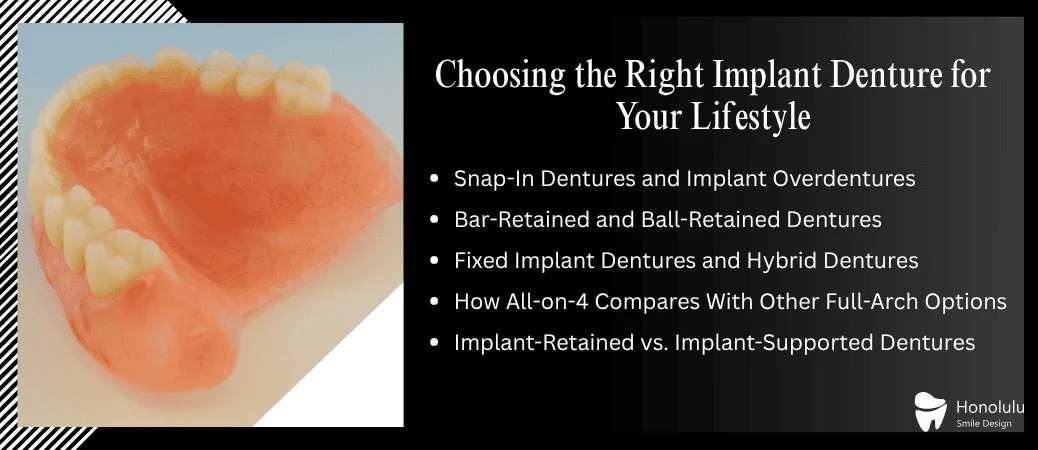
Snap-in dentures, also called implant overdentures, clip onto two to four implants and can be removed each day for cleaning.
This design gives wearers more stability than a traditional denture while keeping the convenience of a removable appliance.
The number of implants used generally falls between 2 and 6, with fewer often needed for the lower jaw than the upper.
Bar-Retained and Ball-Retained Dentures
Bar-retained dentures attach to a thin metal bar that connects multiple implants, while ball-retained dentures use individual ball-shaped attachments on each implant.
Both styles are removable overdentures, but the bar design tends to spread chewing pressure more evenly across the implants.
Ball attachments are often simpler and can cost less, though the individual attachments may need replacing more often than a bar.
Fixed Implant Dentures and Hybrid Dentures
Fixed implant dentures, sometimes called hybrid dentures, attach permanently to implants and are not meant to be removed by the wearer.
Once these are placed, they do not move around, which can make a real difference in day-to-day comfort, speech, and eating.
This option usually requires more implants and stronger bone support than a removable overdenture.
How All-on-4 Compares With Other Full-Arch Options
All-on-4 is a specific fixed-denture technique that uses four strategically placed implants to support a full arch of teeth, often allowing some patients with lower bone density to avoid extensive grafting.
It is one approach among several full-arch options, and whether it fits your case depends on your bone volume and the plan your implant dentist recommends after imaging.
Implant-Retained vs. Implant-Supported Dentures
These two terms get used loosely, but they describe a real difference in how the denture attaches to your implants.
Implant-retained usually refers to removable overdentures that snap onto a smaller number of implants, while implant-supported often describes fixed designs anchored to more implants.
| Option | Removable? | Typical Implants Used | Daily Care |
| Snap-In / Overdenture | Yes | 2 to 4 | Remove nightly for cleaning |
| Bar-Retained | Yes | 2 to 4 (on a bar) | Remove for cleaning |
| Ball-Retained | Yes | 2 to 4 | Remove for cleaning |
| Fixed / Hybrid | No | 4 to 6+ | Brush and floss in place |
| All-on-4 | No | 4 per arch | Brush and floss in place |
What to Expect Before, During, and After Implant Treatment
Getting implant-retained dentures is a multi-step process that starts with a thorough evaluation and ends months later with your final denture in place.
Your implant dentist or prosthodontist needs a clear picture of your bone density, gum health, and medical history before recommending any specific plan.
How an Implant Dentist Evaluates Bone and Gum Health
Your dentist will check for gum disease before dental implants, measure bone density, and review your overall health history before discussing implant options.
Gum disease usually needs to be treated first, since implants placed into infected tissue have a higher risk of failing. This step alone can shift the treatment timeline for some patients.
At Honolulu Smile Design, Dr. John Ha, DDS brings extensive training in dental implantology and restorative dentistry when evaluating patients considering implant-based tooth replacement.
CT Scans, Digital Impressions, and Treatment Planning
A CT scan gives your dentist a 3D view of your jawbone, showing exact bone volume and the location of nerves and sinuses before any surgery is planned.
Digital impressions create a precise model of your existing teeth and gums, which helps design a denture that fits your bite correctly.
Together, these tools let your implant team map out implant placement before you ever sit in the surgical chair.
When Bone Grafting May Be Recommended
Bone grafting may be recommended when a CT scan shows too little bone to support implants safely. The graft material helps rebuild bone volume over several months, after which implants can often be placed.
Patients without enough bone to graft successfully may still have options, since some implant systems use thinner implants that require less bone.
Implant Placement, Temporary Teeth, and Healing
Implant placement involves setting titanium posts into the jawbone, after which most patients wear temporary teeth while healing takes place.
This healing period allows the surgical site to settle and typically lasts a few months. Temporary teeth let you eat, speak, and go about daily life while your body does the work of healing around the new implants.
Osseointegration and Receiving Your Final Denture
Osseointegration is the process where the jawbone fuses tightly around the titanium implant, creating a stable anchor for your final denture.
This fusion is what gives implant dentures their strength and stability, and it takes time, often several months, to complete fully.
Once your dentist confirms the implants have integrated well, they attach or fit your permanent denture.
Living Comfortably With Implant-Retained Dentures
Implant-retained dentures generally feel more secure day to day, but adjusting to them still takes a little time and a new care routine.
Most wearers say the adjustment period feels shorter than expected once the initial healing is behind them.
Eating, Speaking, and Adjusting to a More Secure Fit
Eating may feel more natural with implant-retained dentures because a stable base can provide greater chewing stability than dentures resting on gum tissue alone.
Speech may also feel easier when the denture no longer shifts while you talk.
Cleaning Fixed and Removable Implant Dentures
Removable implant dentures come out for daily cleaning, much like traditional dentures, while fixed dentures stay in place and get brushed like natural teeth.
A water flosser can help clean around implant attachments and under bars where a toothbrush cannot easily reach. Good oral health habits protect both the denture and the gum tissue surrounding your implants.
Why Follow-Up Visits Protect Long-Term Results

Regular dental care helps maintain the health of your implants, gums, and jawbone before small problems turn into bigger ones.
These visits also give your dental team a chance to adjust attachments or replace worn parts on removable dentures.
Skipping regular checkups can allow small problems with implant dentures, attachments, or surrounding tissues to go unnoticed until they require more involved care.
Potential Drawbacks and Maintenance Needs
Implant-retained dentures come with real trade-offs worth knowing about before you commit.
Attachment components on removable styles wear down and need periodic replacement, fixed dentures require more implants and higher upfront cost, and not every wearer is a candidate without additional bone grafting.
Weighing these factors honestly with your implant dentist leads to a more realistic, comfortable outcome.
Choosing a Secure Solution for Your Smile
Loose dentures do not have to be something you simply live with, and they are not the only option either.
Traditional dentures, when well-fitted and properly maintained, still work well for many people, while dental implants offer a path to more stability for those dealing with ongoing slipping, sore spots, or bone changes.
The right choice comes down to your bone health, your daily habits, and how much stability matters to your quality of life.
A conversation with an implant dentist or prosthodontist, backed by imaging and an honest look at your jawbone health, is the clearest way to figure out which tooth replacement option fits your situation.
Exploring dental implants as part of that conversation can help you understand what long-term stability might look like for your specific case.
Frequently Asked Questions
Should new dentures feel loose?
New dentures should feel snug, not loose, though a short adjustment period is normal as your mouth gets used to them.
Mild irritation in the first couple of weeks is common, but persistent slipping or rocking usually means the fit needs correcting.
Contact your dentist if a new denture never feels secure after the initial adjustment period.
What are the problems with implant-retained dentures?
Implant-retained dentures can involve a higher upfront cost, a treatment timeline of several months, and the need for bone grafting if bone density is too low.
Removable styles need attachment parts replaced periodically, and not everyone qualifies without additional preparation.
Your implant dentist can outline which trade-offs apply to your specific bone health and budget.
What type of dentures are the most comfortable to wear?
Comfort depends on the person, but many wearers find implant-retained or implant-supported dentures more comfortable than traditional dentures because they stay stable and cause fewer sore spots.
Fixed implant dentures often feel closest to natural teeth, since they do not move at all. Traditional dentures can still feel comfortable when well-fitted and relined regularly.
How long do implant-retained dentures last?
Implant-retained dentures often last many years when properly cared for, though the removable denture itself may need replacing periodically as it wears down.
The implants themselves, once successfully osseointegrated, can last for decades in patients with good oral health and regular checkups.
Attachment components on snap-in or bar-retained styles typically need replacing every few years.
Can I get implant-retained dentures if I have bone loss?
Bone loss does not automatically rule out implant-retained dentures, but it does affect the treatment plan your implant dentist recommends.
Some patients need bone grafting first, while others may qualify for thinner implants that require less bone volume.
A CT scan and bone density evaluation are the only reliable ways to know which options apply to you.
Can my current dentures be converted into snap-in dentures?
Some existing dentures can be modified to snap onto implants, though this depends on the condition and design of your current denture base.
In many cases, a new denture built specifically for implant attachments provides a better, more durable fit. Your implant dentist can evaluate your current denture to see which path makes sense.