Dental implants can give you back your smile and ability to eat comfortably. But if you have gum disease, you might wonder whether you can move forward with the procedure right away.
In most cases, active gum disease must be treated before you can get dental implants because the infection can prevent proper healing and cause the implant to fail.
The good news is that gum disease doesn’t permanently disqualify you from getting implants. With the right treatment plan, your gums can become healthy enough to support implants successfully.
Your oral health plays a big role in whether dental implants will work for you. Understanding how gum disease affects implants and what steps you need to take can help you make the best choice for your smile.
Key Takeaways
- You need to treat active gum disease before getting dental implants to ensure proper healing
- Healthy gums and bone provide the foundation that implants need to stay secure
- Good oral hygiene and regular dental visits help your implants last for many years
Why Healthy Gums Matter for Dental Implants
Your gums play a bigger role in dental implants than you might think. They create a protective seal around the implant and support the bone that holds everything in place.
How Gum Health Influences Implant Success
Your gums do more than just frame your smile. They act as a barrier that keeps bacteria away from your implant and the bone underneath.
When you have healthy gums, they form a tight seal around the implant post. This seal stops harmful bacteria from getting into the tissues below. Without this protection, bacteria can cause infections that threaten your implant.
Gum disease affects the soft tissue and bone that support your teeth and implants. If you start with unhealthy gums, your body has to fight infection instead of focusing on healing around your new implant.
This makes it harder for successful dental implants to take hold.
Think of your gums as the foundation of a house. A weak foundation makes the whole structure unstable.
Understanding Osseointegration and Implant Stability
Osseointegration is the process where your jawbone fuses with the titanium implant post. This fusion creates implant stability and allows the implant to function like a natural tooth root.
Your gums support this process by protecting the implant site while your bone heals. When gum disease is present, inflammation interferes with your body’s ability to complete osseointegration properly.
Infected or inflamed gums release chemicals that slow down bone healing. This can prevent the implant from integrating correctly with your jawbone. Poor osseointegration weakens implant stability and increases the chance of movement or failure later.
The healing period typically takes several months. During this time, your gums need to stay healthy to give your bone the best chance to fuse with the implant.
Risks of Implant Failure with Untreated Gum Disease
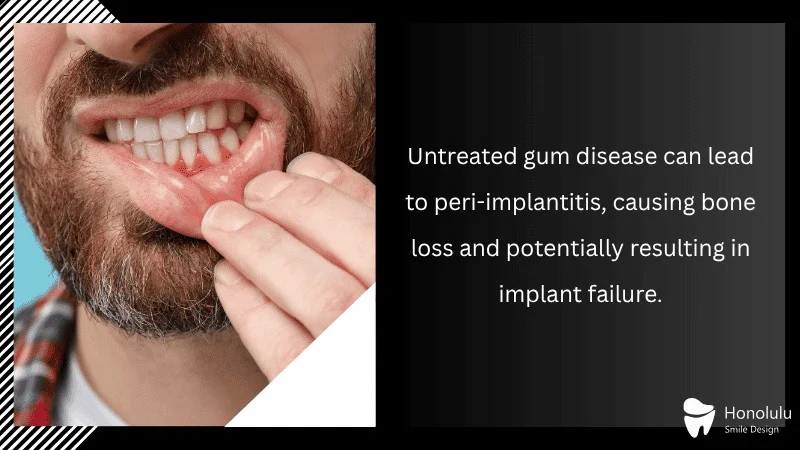
Untreated gum disease creates several serious risks for your dental implants. The biggest concern is peri-implantitis, which is similar to gum disease but affects the area around your implant.
Peri-implantitis causes inflammation and infection in the gum tissue and bone surrounding your implant. This condition can lead to bone loss, which removes the support your implant needs to stay in place.
Common signs of peri-implantitis include:
- Red or swollen gums around the implant
- Bleeding when you brush or floss
- Pus near the implant site
- The implant feeling loose
Active gum disease increases the risk of infection and can lead to implant failure. The bacteria from periodontal disease don’t disappear when you get an implant. They stay in your mouth and can attack the new implant just like they attacked your natural teeth.
Bone loss is another major problem. Gum disease destroys the bone that holds your implant in place, which can cause the implant to fail even years after placement.
Effects of Gum Disease and Bone Loss on Implant Candidacy
Gum disease progresses through distinct stages that affect your jawbone differently, and understanding where you fall on that spectrum helps determine what treatment you need before implants.
The bacteria and inflammation from periodontal disease can weaken the bone structure that implants depend on for stability.
Stages of Gum Disease: Gingivitis vs. Periodontitis
Gingivitis is the early stage of gum disease. Your gums become inflamed and may bleed when you brush or floss, but the infection hasn’t reached your bone yet.
At this stage, the damage is reversible with professional cleaning and improved oral hygiene. You can typically move forward with implants once your gums are healthy again.
Periodontitis is advanced gum disease. The infection has spread below your gum line and started destroying the bone and tissue that hold your teeth in place.
This stage causes permanent damage. Your gums pull away from your teeth, creating pockets where bacteria collect. Without treatment, periodontitis leads to tooth loss and significant bone deterioration that affects implant candidacy.
Signs and Causes of Gum Disease Impacting Implants
Common signs of gum disease include:
- Red, swollen, or tender gums
- Bleeding during brushing or flossing
- Persistent bad breath
- Gum recession that makes teeth look longer
- Loose teeth or changes in your bite
- Pus between your teeth and gums
Plaque and tartar buildup are the main causes. When plaque hardens into tartar, you can’t remove it with brushing alone.
Poor oral hygiene allows bacteria to thrive. Smoking, diabetes, and certain medications increase your risk. Your genetics and autoimmune conditions can also make you more susceptible to periodontal disease, even with good oral care.
Bone Loss, Jawbone Health, and the Need for Bone Grafting
Missing teeth and untreated periodontitis cause your jawbone to shrink. Without tooth roots to stimulate the bone, your body starts reabsorbing that tissue.
Dental implants need adequate bone volume and density to stay stable. When gum disease has caused significant bone loss, your jawbone may not be thick or strong enough to support an implant on its own.
A bone graft rebuilds lost bone at the implant site. Your dentist places grafting material where bone has deteriorated, and over several months, your body integrates it and grows new bone tissue.
Bone grafting is a common step for patients with periodontal disease history. It doesn’t disqualify you from implants; it just adds time to your treatment plan. Many patients successfully receive implants after bone grafting procedures.
Treating Gum Disease Prior to Dental Implant Placement
Your dentist will create a treatment plan based on how severe your gum disease is and how much damage has occurred.
Most patients need deep cleaning procedures first, while those with advanced cases may require surgery or laser treatments to eliminate infection and rebuild damaged tissue.

Deep Cleaning, Scaling, and Root Planing
Scaling and root planing is usually the first step in gum disease treatment. This deep cleaning procedure goes beyond what you get during regular professional cleanings.
During scaling, your dentist or periodontist removes plaque and tartar from above and below your gum line. Root planing smooths the tooth roots to help your gums reattach properly.
The procedure typically requires local anesthesia since it involves cleaning deep into the gum pockets.
Treatment for mild to moderate cases usually includes a re-evaluation six to eight weeks after scaling and root planing. Your dentist checks if your gum tissue has healed and if pocket depths have reduced.
You may also need to improve your oral hygiene by using an antibacterial mouthwash during recovery to keep bacteria under control.
If your gums respond well to treatment, you can move forward with implant planning. Some patients need multiple deep cleaning sessions before their gums are healthy enough for implants.
Surgical and Laser Therapies for Advanced Cases
Advanced gum disease often requires more intensive treatment beyond deep cleaning. Your periodontist or oral surgeon may recommend gum surgery to remove infected tissue and reshape your gums.
Flap surgery involves lifting back your gums to remove tartar deposits in deep pockets. The gums are then secured back in place to fit snugly around your teeth. This helps reduce pocket depth and makes it easier to keep your gums clean.
Laser therapy offers a less invasive option for some patients. The laser targets and removes diseased tissue while leaving healthy gums intact. This treatment often results in less bleeding, swelling, and discomfort compared to traditional gum surgery.
Your dentist may also prescribe medications like antibiotic gels or oral antibiotics to help fight infection. The goal is to eliminate all active gum disease before placing implants.
Restoring Gum and Bone Health for Implant Success
Gum disease often causes bone loss that weakens implant stability. Your oral surgeon needs to rebuild this support before placing implants.
Bone grafting adds new bone material to areas where bone has deteriorated. The graft can come from your own body, a donor, or synthetic materials. This procedure creates a solid foundation that allows the implant to fuse properly with your jawbone.
Gum grafting may also be necessary if gum tissue has receded significantly. Your periodontist takes tissue from another area of your mouth or uses donor tissue to cover exposed areas. This protects the implant and improves your overall gum health.
Key factors your dentist evaluates before implant placement:
- Gum pocket depths (should be 3mm or less)
- Absence of bleeding or inflammation
- Adequate bone density and volume
- No signs of active infection
Healthy gums provide the foundation your implant needs to heal and integrate with the bone. Without treating gum disease first, your implant faces a much higher risk of failure.
Implant Procedure Steps and Special Considerations
Getting dental implants after gum disease treatment involves careful evaluation of your jaw health, potential bone reconstruction, and understanding the surgical risks to ensure successful tooth replacement.
Assessing Implant Candidacy after Gum Disease
Your dentist will perform a thorough evaluation to determine your dental implant candidacy after treating your gum disease.
This assessment includes dental X-rays and 3D imaging to check your jawbone density and remaining bone volume. You’ll also need models made of your teeth and jaw to plan the exact implant placement.
Your oral health history plays a major role in this evaluation. If you’ve had severe gum disease, your dentist will check whether enough bone remains to support the implant.
The bone must be thick enough and strong enough to handle the pressure from chewing.
Key factors that affect your implant candidacy include:
- Bone density and volume in your jaw
- Overall health conditions that affect healing
- Smoking status
- Commitment to proper oral hygiene
- Willingness to complete a multi-month process
You may need additional healing time after gum disease treatment before implant surgery can begin. Your periodontist will confirm that all infection is gone and your gums are healthy enough to support replacement teeth.
Bone Grafting and Mini Implants as Alternatives
Bone grafting may be necessary if gum disease has caused significant bone loss in your jaw. A bone graft rebuilds the foundation needed for stable implant placement.
Your dental professional can use natural bone from another location in your body, synthetic bone-substitute material, or bone from a donor source.
The bone graft procedure adds several months to your treatment timeline. You’ll need to wait for the transplanted bone to grow enough new bone before the dental implant surgery can proceed.
In some cases, minor bone grafting can happen at the same time as implant placement.
Mini implants offer an alternative if you have moderate bone loss. These smaller implants require less bone volume and may not need grafting.
However, they work best for specific situations and may not be suitable for all tooth replacement needs.
Risks and Precautions During Implant Surgery
Dental implant surgery carries some risks, though they’re usually minor when proper precautions are taken. Infection at the implant site is the main concern for people with a history of gum disease.
Your dentist may prescribe antibiotics before and after the oral surgery to prevent complications.
Common risks during the implant procedure include:
- Infection at the surgical site
- Damage to surrounding teeth or blood vessels
- Nerve damage causing numbness or tingling
- Sinus problems if upper jaw implants extend too far
You’ll experience some discomfort after each stage of surgery. Swelling, bruising, minor bleeding, and pain at the implant site are normal. Your surgeon will recommend pain medicines and tell you to eat soft foods while you heal.
The implant can fail if your bone doesn’t fuse properly to the metal post. Smoking significantly increases this risk. If failure occurs, the implant is removed and you can try again after three months of healing.
Maintaining Implant and Gum Health Long-Term
Keeping your dental implants healthy requires consistent oral hygiene habits, regular professional care, and quick action if problems develop.
Your commitment to long-term oral health protects your investment and keeps your smile functional for decades.
Oral Hygiene Habits Post-Implant
You need to brush twice daily with a soft-bristled toothbrush and non-abrasive toothpaste to protect your implants. Pay special attention to the areas where your implant meets the gum line, as bacteria can accumulate there.
Flossing around your implants once per day is just as important as brushing. You can use traditional floss, interdental brushes, or water flossers to clean between teeth and around implant posts.
Consistent home care matters most when you have a history of gum disease. If your oral hygiene slips, gum disease can flare up again and threaten your implants.
Use antimicrobial mouth rinse if your dentist recommends it to reduce bacteria around your implants.
Avoid smoking, which significantly increases your risk of implant failure and gum problems. Tobacco use interferes with healing and makes infections more likely to develop around your implants.
Dental Check-Ups and Ongoing Maintenance
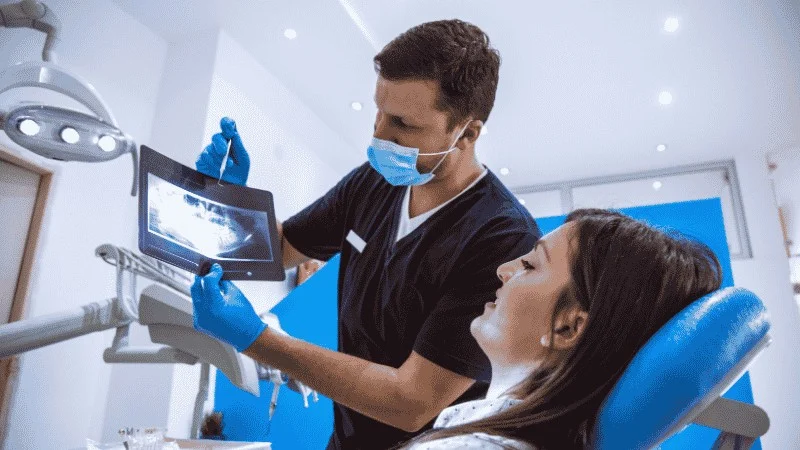
You should schedule professional cleanings and exams every three to six months after getting implants. These visits are more frequent than standard six-month checkups because patients with periodontal disease history need closer monitoring.
During these appointments, your dental team will remove plaque and tartar buildup that you can’t reach at home. They’ll also check for early signs of inflammation or infection around your implants.
Your dentist or hygienist will look for bleeding, redness, or swelling near your implant sites during each visit. These symptoms could indicate problems that need immediate attention.
Deep cleanings may be necessary if your provider notices infection developing around the implant.
Regular dental check-ups allow your dentist to catch small issues before they become serious threats to your dental implant success.
Dealing with Peri-Implantitis and Preventing Relapse
Peri-implantitis is an inflammatory condition affecting the gum and bone surrounding your dental implant. It’s caused by bacterial plaque accumulation and works similarly to periodontitis around natural teeth.
You can develop peri-implantitis even years after your implant placement if bacteria build up around the implant post. Warning signs include bleeding when you brush, swelling, bad breath, or looseness around the implant.
If you notice these symptoms, contact your dentist immediately. Early treatment may include deep cleanings, antibiotics, or antimicrobial treatments to eliminate infection.
Advanced cases might require surgical intervention to clean infected tissue and restore bone support.
To prevent gum disease relapse and protect your implants, maintain excellent brushing and flossing habits every single day. Never skip your scheduled professional cleanings, as these appointments are your best defense against infection.
Frequently Asked Questions
People with gum disease often wonder if they can still qualify for dental implants and what risks they might face. Treatment costs and special implant options also raise important questions for those dealing with periodontal issues.
Can I still get dental implants if I have receding gums?
Yes, you can still get dental implants if you have receding gums. However, your dentist will need to evaluate how severe the recession is first.
Receding gums often happen because of gum disease. This means the tissue that supports your teeth has pulled back. Before placing implants, your dentist might recommend gum grafting to build up the tissue around the implant site.
The graft helps create a strong foundation for the implant. It also protects the implant from future problems. Without enough healthy gum tissue, the implant might not stay secure long-term.
What happens if gum disease isn’t treated before getting dental implants?
Untreated gum disease significantly increases your risk of implant failure. The active infection prevents proper healing and stops the implant from bonding correctly with your jawbone.
You might develop an infection around the implant called peri-implantitis. This condition is similar to gum disease but affects the tissue around the implant. It can cause the implant to become loose or fall out completely.
The bacteria from gum disease can spread to the implant site during surgery. This creates a cycle of infection that makes healing nearly impossible. That’s why treating gum disease before implant placement is essential for success.
Can dental implants work if I have bone loss from periodontal disease?
Dental implants can work even if you have bone loss from periodontal disease. But you’ll likely need bone grafting first to rebuild the support structure.
Bone loss weakens implant stability because the implant needs enough bone to hold it in place. Without adequate bone density and volume, the implant won’t have a strong foundation.
A bone graft adds material to your jaw to create the thickness and height needed.
The grafting process takes several months to heal before implants can be placed. Your dentist will take X-rays to measure how much bone you have and determine if grafting is necessary. While this adds time to your treatment, it greatly improves your chances of success.
Are All-on-4 dental implants an option if I’ve had gum disease?
All-on-4 dental implants can be an option if you’ve had gum disease. You’ll need to get your gum disease under control first before moving forward with this treatment.
All-on-4 uses four strategically placed implants to support a full arch of teeth. This method often works well for people who have experienced bone loss. The angled placement of the implants can take advantage of existing bone without requiring extensive grafting.
Your dentist will assess whether your bone quality is sufficient for All-on-4. If your gum disease caused significant bone deterioration, you might still need some grafting.
Once your gums are healthy and stable, All-on-4 can provide a permanent tooth replacement solution.
Does a history of periodontal disease increase the risk of implant failure?
Yes, a history of periodontal disease does increase your risk of implant failure. Even after successful treatment, you’re more likely to develop problems around your implants compared to someone who never had gum disease.
You can develop gum disease around an implant even after successful placement. That’s why ongoing periodontal maintenance is so important. Regular cleanings and check-ups help catch any signs of infection early.
Your dentist will likely recommend more frequent follow-up visits. You’ll need to be extra careful with your oral hygiene routine at home. Brushing twice daily, flossing around the implants, and using any prescribed mouth rinses can protect your investment.
How much do dental implants typically cost, and what factors affect the price?
Dental implant costs vary widely depending on several factors. A single implant can range from $3,000 to $6,000 or more in most areas.
If you have gum disease, your total cost will likely be higher because you’ll need extra treatments first. Deep cleanings, gum surgery, or bone grafting all add to the final price. Each of these procedures comes with its own fees.
The type of implant you choose affects the price. Premium materials and advanced techniques cost more. Your dentist’s experience may also play a part in pricing, as specialists often charge higher fees.
Insurance coverage varies significantly. Some plans cover part of the gum disease treatment but not the implants themselves. Check with your insurance provider to understand what’s included in your plan.