Right after implant dentistry, you want food that asks nothing of your jaw.
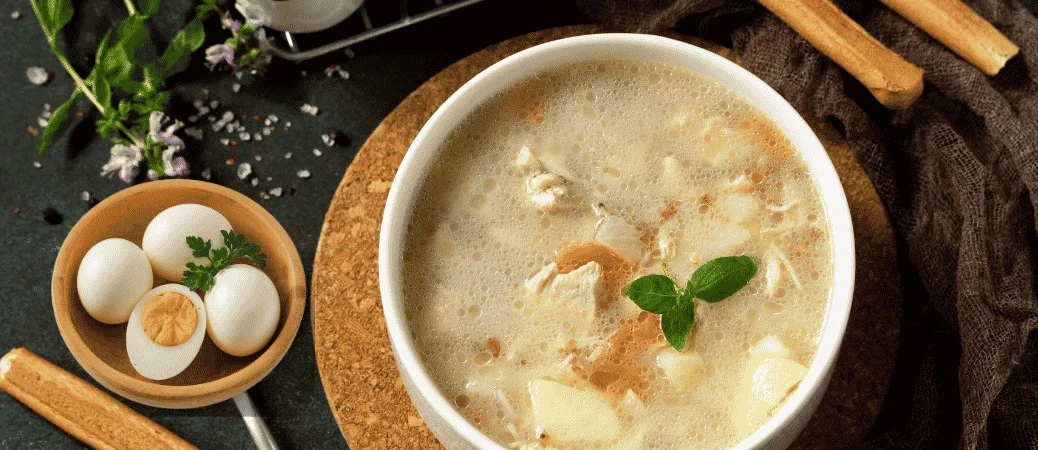
For the first 24 hours, stick with cool or lukewarm foods you can eat with a spoon, like yogurt, blended soups, and mashed potatoes, and save anything that needs real chewing for later in the week.
Your mouth is swollen, maybe still numb, and the surgical site needs quiet, not a workout.
What to eat after dental implant surgery changes week by week, and that progression matters more than most people expect. Moving too fast can irritate tissue that is still knitting together.
Moving at a reasonable pace, guided by your own comfort and your surgeon’s instructions, supports dental implant recovery without adding unnecessary setbacks.
This guide walks through that progression in practical terms: what lands on your plate the day of surgery, what gets added as swelling eases, and when firmer foods make sense again.
None of it replaces the specific aftercare plan your oral surgeon or prosthodontist gave you. If their instructions say something different, follow what they told you.
Key Takeaways
- Soft, cool, no-chew foods come first, with texture added gradually over two to four weeks as comfort allows.
- Feeling fine is not the same as being fully healed; osseointegration continues for months after the surgical site feels normal.
- Protein, fluids, and avoiding straws, alcohol, and crunchy foods matter more to recovery than any single “superfood.”
What Can You Eat in the First 24 Hours?
In the first 24 hours after dental implant surgery, you can eat soft, cool foods like yogurt and blended soups as soon as the numbness has worn off.
The goal during this window is simple: protect the blood clot forming at the surgical site and avoid putting any pressure on the area.
Wait Until Numbness Wears Off Before Eating
Eating while your mouth is still numb is a common way to accidentally bite your lip, cheek, or tongue without realizing it.
Wait until feeling has fully returned before trying any food, even something soft. Sip cool water in the meantime to stay comfortable and hydrated.
Choose Cool, Smooth Foods That Need No Chewing
Once numbness fades, reach for foods that slide down easily: yogurt, applesauce, mashed potatoes, blended soups cooled to room temperature, and pudding or custard all work well.
A smoothie eaten with a spoon, not sipped through a straw, is another solid option.
Keep temperatures cool to lukewarm, since heat can increase blood flow to the area and worsen swelling. Skip straws entirely during this window; the suction can dislodge the clot protecting your implant site.
What Can You Eat During Days 2–7?
Between days two and seven, you can start adding soft, protein-rich meals like scrambled eggs, mashed potatoes, and soft fish as swelling and tenderness begin to ease.
The texture should stay gentle, but you have more room to work with than you did on day one.
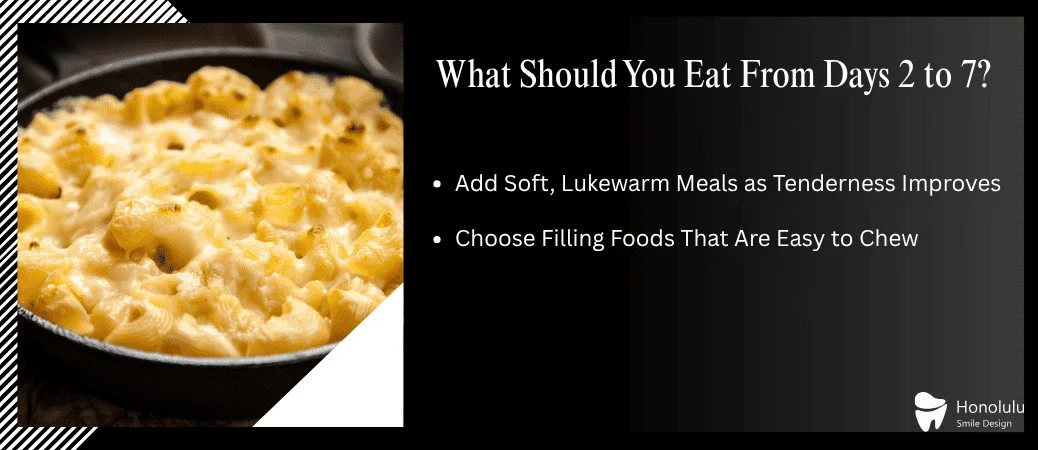
Add Soft, Lukewarm Meals as Tenderness Improves
By day two or three, many people feel ready for something a little heartier than purees. Soft fish that flakes apart easily, well-cooked rice, soft pasta, and oatmeal thinned slightly with milk all fit this stage.
Keep food lukewarm rather than hot, and continue chewing on the side away from the implant if your surgeon has advised that.
Choose Filling Foods That Are Easy to Chew
This is a good week to lean on protein-rich soft foods, since your body is using amino acids to repair tissue.
Scrambled eggs, mashed potatoes with gravy or butter, soft tofu, and flaked salmon or tilapia are easy to prepare and genuinely filling.
A warm bowl of mac and cheese or a soft omelet can feel like real comfort food without demanding much from your jaw. Avoid anything spicy or acidic during this stretch, since both can irritate tissue that is still healing.
How Should Your Diet Change in Weeks 2–4?
By weeks two through four, most people can gradually reintroduce firmer textures, though the pace should follow comfort rather than a fixed calendar.
Dental implants rely on a process called osseointegration, where bone fuses to the titanium post, and that process continues well past the point when your mouth stops feeling sore.
Week 2: Try Fork-Tender Foods and Gentle Chewing
By the second week, initial gum healing is often progressing, although the surgical site may still be sensitive. Your surgeon can advise when it is safe to introduce foods that require more chewing.
Ground meat, soft bread without hard crusts, steamed vegetables, and baked chicken cut into small pieces are reasonable additions. Keep chewing gentle and avoid direct pressure on the implant itself.
Weeks 3–4: Reintroduce Firmer Textures Gradually
During weeks three and four, some patients may gradually return to a wider range of foods if healing is progressing well and their surgeon approves.
Patients with bone grafts, multiple implants, or temporary full-arch restorations may need to follow a soft-food diet longer.
When Can You Eat Normally After Implant Placement?
There is no single date that applies to everyone, and feeling comfortable is not proof that healing is finished.
Osseointegration typically takes three to six months, and your surgeon confirms that progress at follow-up visits rather than you guessing from how things feel.
Routine single-implant placement often allows a faster return to normal textures than cases involving bone grafting, several implants at once, or temporary full-arch teeth, which call for a longer soft-food stretch.
Which Foods and Drinks Should You Avoid?
Hard, crunchy, sticky, spicy, very hot, and alcoholic items all pose a risk during implant healing, each for a slightly different reason.
Avoiding these foods helps protect the surgical site from irritation, bleeding, and unnecessary pressure while the surrounding gum tissue heals.
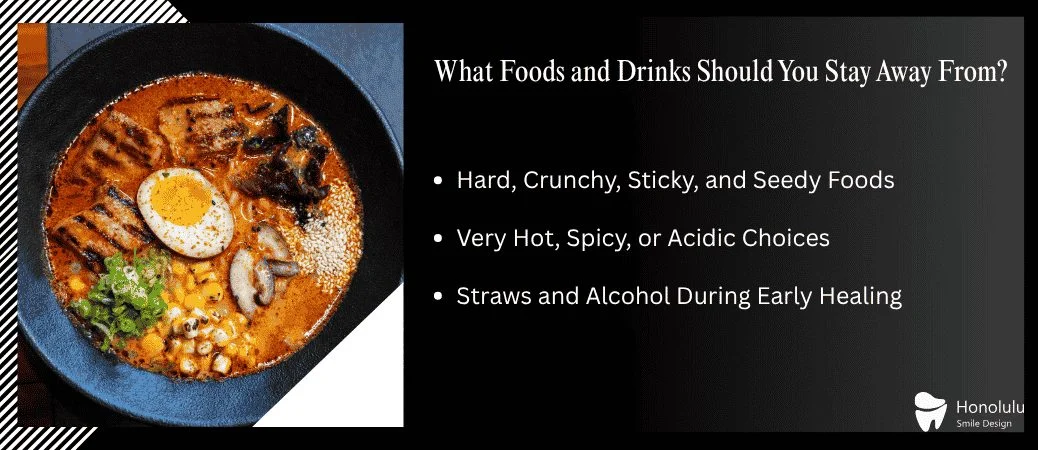
Hard, Crunchy, Sticky, and Seedy Foods
Nuts, chips, popcorn, and raw vegetables can strike the implant site with direct force or leave sharp fragments behind.
Sticky foods like caramel or taffy pull at healing tissue, and small seeds or grains, including sesame and poppy seeds, can lodge in the surgical area and cause irritation.
Very Hot, Spicy, or Acidic Choices
Heat increases blood flow to the area, which can worsen swelling and bleeding in the first few days.
Spicy dishes and acidic foods like citrus fruit, tomato sauce, or vinegar-heavy dressings irritate tissue that is still raw, so it is worth setting them aside until things settle.
Straws and Alcohol During Early Healing
Straws create suction that can dislodge the blood clot protecting your implant site, a serious setback this early in recovery.
Alcohol thins blood, can interfere with clot formation, and may interact with prescribed pain medication or antibiotics, so most surgeons ask patients to avoid it for at least the first few days.
If you are rebuilding your daily habits around implant care, these dos and don’ts for dental implants are worth reviewing alongside your surgeon’s written instructions.
How Can You Stay Nourished on a Soft Diet?
Staying nourished on a soft diet means building meals around protein and fluids rather than just avoiding problem foods.
A week of toast and tea leaves you underfed right when your body needs fuel to repair tissue and support bone healing.
Build Meals Around Soft Protein and Fluids
Eggs, Greek yogurt, cottage cheese, soft tofu, and flaked fish all deliver protein without demanding much chewing. Pair those with plenty of water throughout the day, since dehydration can slow healing generally.
A protein shake or smoothie eaten with a spoon makes an easy stand-in when a full meal feels like too much effort.
Ask Your Surgeon About Longer Restrictions After Complex Surgery
If your procedure involved bone grafting, multiple implants, or immediate temporary teeth, your soft-food period may run longer than a routine single-implant case.
An oral surgeon who worked directly on your mouth is best positioned to tell you when it is safe to add texture back.
Let Healing Set the Pace for Your Diet

Your diet after dental implant surgery should move from cool, no-chew foods toward soft meals and then firmer textures, but the timeline bends to your comfort and your surgeon’s assessment, not a fixed calendar.
Protein, hydration, and patience with hard or sticky foods do more for your recovery than any single ingredient.
Keep your surgeon’s written instructions as the final word, especially if your procedure involved grafting or multiple implants.
When something differs from what you read here, their guidance wins, because it reflects what actually happened in your mouth.
A quick check-in with your provider, whether that’s your own surgeon or a team like Honolulu Smile Design, can save you from guessing during a week when guessing is the last thing you want to do.
Frequently Asked Questions
What can I eat seven days after dental implant surgery?
By day seven, many people can manage soft, fork-tender foods like soft pasta, well-cooked rice, flaky fish, and tender scrambled eggs.
Chewing should still stay gentle, and hard, crunchy, or sticky foods remain off the table. If chewing causes pain or pressure at the implant site, stepping back to softer foods for another day or two is a reasonable choice.
Can I eat rice after dental implant surgery?
Yes, well-cooked, soft rice is a reasonable choice once you are past the first day or two of surgery.
Keep it soft and avoid rice dishes with hard mix-ins, crunchy toppings, or very hot temperatures. Risotto and congee are easy variations that go down even more smoothly in the first week.
Why might my surgeon tell me to avoid dairy?
Your surgeon may recommend avoiding dairy foods because of nausea, medication instructions, or individual medical needs. Follow the aftercare guidance provided for your procedure.
When can I eat spicy food after a dental implant?
Spicy food is worth avoiding for at least the first week or two, since it can irritate tissue that is still healing around the implant site.
Many people wait until they are back to a near-normal diet, often around weeks three or four, before reintroducing spicier dishes. If a food causes stinging or discomfort, it is a sign to wait a bit longer.
What should I eat after an implant is uncovered?
After an implant is uncovered for a healing abutment or crown placement, soft foods are usually recommended again for a few days while the gum tissue around the new abutment settles.
Scrambled eggs, mashed potatoes, soft fish, and blended soups work well during this short readjustment.