If you have diabetes or osteoporosis, you may wonder if dental implants are still an option. You want a strong, lasting solution for missing teeth, but you also want to stay safe.
Yes, you can often get dental implants if you have diabetes or osteoporosis, as long as your condition is well managed and your dentist plans your care carefully.
Many people with these health issues receive implants with good results when they control blood sugar, monitor bone health, and share their full medical history.
Your health history matters, but it does not always block treatment. With the right evaluation, imaging, and care plan, you can learn what options fit for dental implants for diabetics.
Key Takeaways
- Many people with diabetes or osteoporosis can still qualify for dental implants.
- Good medical control and careful planning help lower risks and support healing.
- A full health review helps your dentist choose the safest and most effective option.
Table of Content
- Dental Implant Basics and Why Health History Matters
- Diabetes and Dental Implants: Understanding Your Options
- Osteoporosis and Bone Health: What Patients Should Know
- Medication Considerations and Unique Risks
- Advanced Solutions for Challenging Cases
- Frequently Asked Questions
Dental Implant Basics and Why Health History Matters
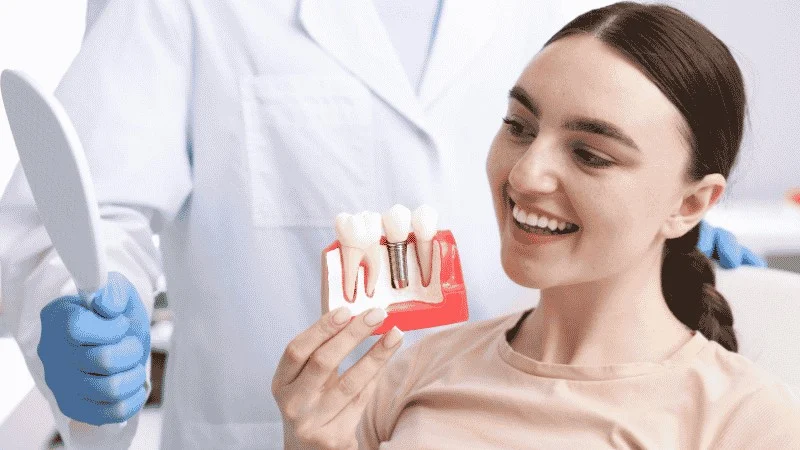
Dental implants replace missing teeth by anchoring a small post in your jawbone. Your health history affects healing, stability, and long‑term success, so it plays a key role in implant eligibility and treatment planning.
How Dental Implants Work
A dental implant acts like an artificial tooth root. Your dentist places a small titanium post into your jawbone during a minor surgery.
Over the next few months, your bone heals around the post. After healing, your dentist attaches a connector and a custom crown so the tooth looks and functions like a natural one.
Your overall health matters at each step. Conditions like diabetes or osteoporosis can affect healing time, bone strength, and infection risk.
That does not mean you cannot get implants. It means your dentist must review your medical history, medications, and lab values as part of careful treatment planning.
The Role of Osseointegration
Osseointegration is the process that makes dental implants stable. It happens when your jawbone grows and bonds directly to the implant post.
This bond keeps the implant from moving when you chew or speak. Without strong osseointegration, the implant can loosen or fail.
Your body’s ability to heal affects this process. If your blood sugar stays high, healing may slow down.
Research on dental implants and diabetes safety explains that high glucose levels can delay wound healing and raise infection risk.
Bone density also matters. Osteoporosis can reduce bone mass, which may affect how well the implant anchors.
Your dentist may use imaging to measure bone volume and decide if you need extra support, such as bone grafting.
Key Components: Post, Abutment, and Crown
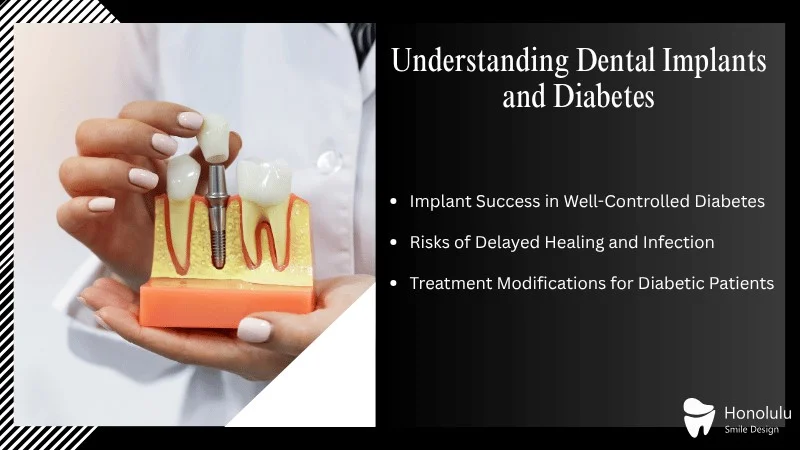
Each dental implant has three main parts:
- Implant post – placed in the jawbone
- Abutment – connects the post to the crown
- Crown – the visible tooth on top
The post sits below your gums and supports the entire structure. Its stability depends on bone quality and successful osseointegration.
The abutment attaches after healing. It sticks slightly above the gum line and holds the final restoration in place.
The crown matches the color and shape of your natural teeth. It restores chewing function and appearance.
Your health history can influence each stage, from surgery to crown placement.
That is why your dentist reviews medications, chronic conditions, and lifestyle habits before confirming your implant eligibility and final treatment plan.
Diabetes and Dental Implants: Understanding Your Options
If you have diabetes, you can often still qualify for dental implants. Your blood sugar control, healing ability, and daily habits play a direct role in implant success and safety.
Implant Success in Well-Controlled Diabetes
You may wonder, can diabetics get dental implants safely? In many cases, yes.
When you keep your blood sugar within your target range, your body can heal after implant surgery in a predictable way.
Many dental providers note that people with diabetes can receive dental implants when their condition is well managed.
Your dentist will review your recent HbA1c levels, medications, and overall health. Stable readings over several months matter more than one good test result.
If you qualify, you can choose from options such as:
- Single tooth implants
- Implant bridges
- All-on-4 full arch systems
Your implant eligibility depends on bone quality, gum health, and how well you manage your diabetes day to day. Careful treatment planning helps reduce risks and supports long-term stability.
Risks of Delayed Healing and Infection
Diabetes can affect how fast your body heals. High blood sugar may slow tissue repair and increase your risk of infection.
After implant surgery, your jawbone must fuse with the implant in a process called osseointegration. If you have poorly controlled diabetes, you may face delayed healing, which can extend recovery time.
You also face a higher risk of peri-implantitis, leading to gum disease treatment. This condition causes inflammation and bone loss around the implant. It often starts with plaque buildup and gum irritation.
You lower these risks when you:
- Keep blood sugar stable
- Brush and floss daily
- Attend regular dental cleanings
- Avoid smoking
Your dentist will monitor you closely during healing. Early action can prevent small problems from becoming serious complications.
Treatment Modifications for Diabetic Patients
Your dentist may adjust your treatment plan to protect your health. These changes are common with dental implants with diabetes.
For example, your provider may:
- Schedule shorter morning appointments
- Confirm your blood glucose level on surgery day
- Use preventive antibiotics in certain cases
- Allow extra healing time before placing the final crown
Some clinics, including centers like ClearChoice Dental Implant Center, stress detailed health reviews before surgery to confirm safe implant eligibility.
If you consider full-arch options like All-on-4, your dentist will assess bone density and healing capacity with imaging scans. They may stage the treatment instead of completing it in one step.
When you and your dental team coordinate with your medical doctor, you improve safety and reduce complications linked to diabetes and dental implants.

Osteoporosis and Bone Health: What Patients Should Know
Osteoporosis lowers bone density, but it does not automatically rule out dental implants. Your bone quality, medical history, and medications all shape your treatment plan and implant eligibility.
Bone Density and Implant Stability
Dental implants rely on a process called osseointegration. This happens when the implant fuses with your jawbone and becomes stable.
If you have osteoporosis, your bone may be thinner or less dense. Lower density can affect how firmly the implant holds at first.
However, research shows that osteoporosis alone does not seem to lower implant survival rates.
You do not need perfect bone. You need enough healthy bone in the right area to support the implant.
Your dentist will check:
- Jawbone height and width
- Bone density from imaging scans
- Implant location (front vs. back of the jaw)
In some cases, options like All-on-4 use angled implants to work around weaker bone areas.
Managing Bone Loss for Implant Placement
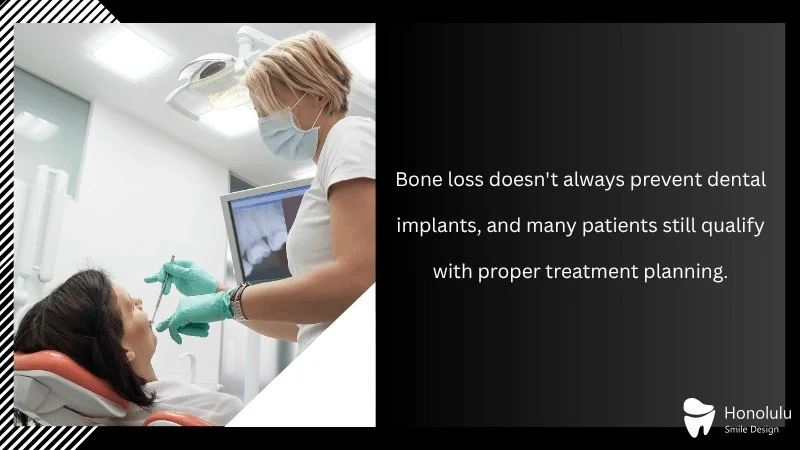
Bone loss does not always prevent implants. Many people with dental implants and bone loss still qualify after proper planning.
If your jaw lacks enough volume, your dentist may suggest:
- Bone grafting to rebuild lost bone
- A sinus lift if you need implants in the upper back jaw
- Short or narrow implants in select cases
These procedures create a stronger base for implant placement. Healing may take several months before the final implant goes in.
You may still qualify for implants even with health conditions. What matters most is how well your condition is managed.
Your dentist will review your bone scans and medical history before confirming implant eligibility.
Osteoporosis Medications and Jaw Health
Many people with osteoporosis take drugs such as Fosamax, Reclast, other bisphosphonates, or denosumab. These medications slow bone breakdown and lower fracture risk.
They can also affect how your jaw heals after surgery. In rare cases, they link to osteonecrosis of the jaw (ONJ), a condition where jawbone tissue does not heal properly after dental procedures.
The risk depends on:
- Type of drug
- Dose and length of use
- Whether you take it by mouth or IV
- Your overall health
Even if you take medications like Reclast or Fosamax, you may still receive implants with careful planning. Many experts consider dental implants generally safe for people with osteoporosis.
Tell your dentist about all medications before treatment. Your care team may coordinate with your physician to lower your risk and protect your jaw health.
Medication Considerations and Unique Risks
Some medicines used to treat osteoporosis can affect how your jawbone heals after implant surgery.
You need to review your medication list with your dentist and doctor before you move forward.
Bisphosphonates: Fosamax, Reclast, and Implant Healing
Doctors often prescribe bisphosphonates like Fosamax (alendronate) and Reclast (zoledronic acid) to slow bone loss. These drugs help keep bones strong, but they also reduce how quickly bone breaks down and rebuilds.
Dental implants depend on steady bone healing to fuse with your jaw.
If you take oral bisphosphonates such as Fosamax, your risk is usually lower than with IV drugs like Reclast. IV forms stay in your system longer and may raise the chance of healing problems after surgery.
Influence of osteoporosis medications on dental implants shows that careful screening matters. Your dentist may ask:
- How long have you taken the drug?
- Do you take it by mouth or IV?
- Do you have other health issues, like diabetes?
You may need extra monitoring during healing. In some cases, your doctor may adjust timing, but you should never stop medication without medical advice.
Denosumab and Delayed Healing Risks
Denosumab (brand name Prolia) works differently from bisphosphonates. It blocks a signal that tells your body to break down bone. This action helps treat osteoporosis, but it can affect how your jaw responds to surgery.
Because denosumab changes bone turnover, you may face a higher risk of delayed healing after implant placement.
Unlike bisphosphonates, its effects wear off faster once you stop injections. Timing becomes important.
Many patients with health conditions can still qualify for implants with proper planning. Your care team may coordinate implant surgery between injection cycles to lower risk.
You should report any jaw pain, swelling, or exposed bone right away. Early action helps prevent more serious problems.
Understanding Osteonecrosis of the Jaw
The most serious concern with these medications is osteonecrosis of the jaw (ONJ). This condition happens when part of the jawbone does not heal and becomes exposed after a dental procedure.
ONJ remains rare, especially in people who take oral drugs for osteoporosis rather than high-dose IV therapy for cancer. Still, your risk increases if you:
- Have taken bisphosphonates or denosumab for several years
- Have poorly controlled diabetes
- Smoke
- Have gum disease
Implant surgery places stress on the jawbone. If healing slows, small areas of bone may stay exposed.
Your dentist will check your gums, review X-rays, and confirm that your blood sugar and oral health stay stable before treatment.
Clear communication between you, your dentist, and your physician lowers your risk and supports safe implant healing.
Advanced Solutions for Challenging Cases
If diabetes or osteoporosis has reduced your bone density, you still have options.
Dentists use added bone support, special implant designs, and detailed treatment planning to improve stability and healing.
Bone Grafting and Sinus Lift Procedures

If your jawbone lacks height or width, your surgeon may recommend bone grafting. This procedure adds natural or synthetic bone material to thin areas of your jaw.
Over several months, your body replaces the graft with your own living bone. This process creates a stronger base for implants and helps improve long-term stability.
For the upper back jaw, a sinus lift may help. The surgeon gently raises the sinus membrane and places bone material beneath it.
This adds vertical height where bone loss often occurs after tooth loss.
Many clinics now treat complex cases with careful imaging and planning. Your dentist will check healing time closely, especially if you have diabetes.
Stable blood sugar levels help your graft heal more predictably.
All-on-4 and Full-Arch Implant Methods
If you have lost most or all of your teeth, you may not need an implant for each one. The All-on-4 method uses four implants to support a full arch of fixed teeth.
Your surgeon places the back implants at an angle. This design increases contact with available bone and often avoids the need for large grafts.
This approach works well when bone loss affects parts of your jaw but not the entire arch. It can reduce surgery time and lower cost compared to placing many single implants.
Your dentist will review your medical history and imaging before recommending full-arch options. You receive a plan based on your bone levels, health status, and long-term goals.
If you have osteoporosis, your provider will also review any bisphosphonate use before surgery.
Treatment Personalization and Collaborative Care
You benefit most from detailed treatment planning. Your dentist will review:
- Recent HbA1c levels if you have diabetes
- Bone density scans
- Current medications
- Gum health
They may contact your primary doctor or endocrinologist. This team approach helps control blood sugar and manage medications before surgery.
Personalized care matters because no two patients heal the same way. If you have diabetes, you may need shorter follow-up intervals and more frequent cleanings.
If you have osteoporosis, your dentist will choose implant positions with the strongest bone.
Careful planning and close monitoring give you a safer path to long-lasting implants.
Frequently Asked Questions
Many people with diabetes or osteoporosis can still get dental implants when their condition is well managed.
Your blood sugar levels, bone health, medications, and healing ability all play a direct role in how successful your treatment will be.
Is it safe for someone with diabetes to get dental implants?
Yes, it can be safe if you keep your diabetes under control. Research shows that people with well-managed diabetes often have implant results similar to those without diabetes.
If your blood sugar stays high for long periods, your risk of infection and slow healing increases. Your dentist will review your medical history before moving forward.
How does blood sugar control affect dental implant success?
Blood sugar control affects how your body heals after surgery. High glucose levels can slow tissue repair and weaken your response to bacteria.
Many providers look at your A1C level to judge long-term control. Steady blood sugar levels support better healing and implant stability.
When you manage your diabetes well, your chances of success improve.
What extra tests or medical clearance might be needed before implant surgery?
Your dentist may request recent lab results, including your A1C. They might also contact your primary care doctor to confirm your condition is stable.
If you have osteoporosis, your provider may check bone density records. In some cases, you may need imaging to measure bone volume in your jaw.
These steps help your care team plan surgery safely.
Do osteoporosis medications (like bisphosphonates) change my implant options?
Some osteoporosis drugs, including bisphosphonates like Fosamax or Reclast, can affect bone healing. Your dentist must review how long you have taken the medication and the dose.
In many cases, implants remain an option, but your treatment plan may need adjustments.
What is the healing time like for people with diabetes or low bone density?
Healing may take longer if you have uncontrolled diabetes or low bone density. Your body needs time to allow the implant to bond with the bone.
Stable medical conditions often lead to predictable healing. Many people with managed diabetes still achieve strong results. Your dentist may schedule extra follow-up visits to track your progress.
How can I lower the risk of infection or implant failure after the procedure?
Keep your blood sugar within your target range before and after surgery. Follow your dentist’s instructions closely.
Brush and floss every day, and attend all follow-up visits. If you notice swelling, pain, or signs of infection, contact your dental office right away.
Good home care and steady medical management protect your implant and support long-term success.