
Missing teeth can make you feel less confident about your smile, and you might wonder if you have waited too long to fix it.
The good news is that dental implants for seniors can remain an option well into your 60s, 70s, and beyond because age alone does not determine whether you qualify.
Your health and lifestyle matter more than the number of candles on your birthday cake.
Dental implants can be a strong option for tooth replacement, but your dentist will look at things like your bone strength, gum health, and any medical conditions before moving forward.
This article will walk you through what really affects your chances of getting dental implants after 60.
You will learn what to expect during the process, how to choose the right option for your smile, and how to keep your new teeth healthy for years to come.
Key Takeaways
- Your age does not decide whether you can get dental implants, but your overall health does.
- A strong enough jawbone and healthy gums are needed to support a successful implant.
- Following your dentist’s care instructions helps your implants last for many years.
Table of Content
- Age Is Not the Deciding Factor
- Health and Lifestyle Factors to Review
- Jawbone and Gum Requirements
- The Dental Implant Treatment Journey
- Choosing the Right Tooth Replacement Solution
- Supporting Long-Term Implant Success
- Frequently Asked Questions
Age Is Not the Deciding Factor
Your birthday has less to do with implant success than you might think. What really matters is your bone health, gum condition, and how well you manage any existing health issues.
What Determines Implant Candidacy
There is no strict age limit for dental implants. Your dentist looks at a handful of specific factors instead of your age on paper.
Here is what actually gets checked:
- Bone density in the jaw where the implant will go
- Gum health and any signs of infection
- Chronic conditions like diabetes or heart disease
- Medications that might affect healing
- Smoking habits, which can slow recovery
Many older adults qualify for implants without any special exceptions. If you have missing teeth from tooth loss due to age, injury, or gum disease, your dentist will still run the same basic checks they would for a younger patient.
Your specific health picture, not your date of birth, drives the decision.
Dental Implant Success Rates in Older Adults
You might assume that getting older lowers your chances of a successful implant. That is not the case.
Research on dental implant success rates shows outcomes for older patients are similar to those for younger adults when overall health is well managed.
Your body’s ability to heal around the implant matters more than the number of years you have lived.
Healing might take a bit longer as you age, but the dental implant success rate for people over 60 remains strong.
More people are recognizing this. Implant use among adults over 50 has jumped significantly in the last two decades, showing that dentists and patients alike trust implants as a safe option later in life.
Benefits for Daily Comfort and Quality of Life
Getting implants can make a real difference in how you eat, speak, and feel every day. You will likely notice improvements almost right away once healing is complete.
Here is how implants can help you:
- Chewing becomes easier, so you can enjoy a wider variety of foods
- Speech improves since implants stay firmly in place, unlike some dentures
- Confidence grows when you smile without worrying about shifting teeth
- Jawbone stays stronger since implants stimulate bone the way natural teeth do
Your quality of life often improves in ways beyond just your smile. Simple daily tasks, like enjoying a meal with friends or laughing without hesitation, become easier again.
Health and Lifestyle Factors to Review
Your overall health plays a bigger role in implant success than your birth date.
Before you book a consultation, it helps to know how health factors that matter more than age can affect healing, bone strength, and your long-term results.
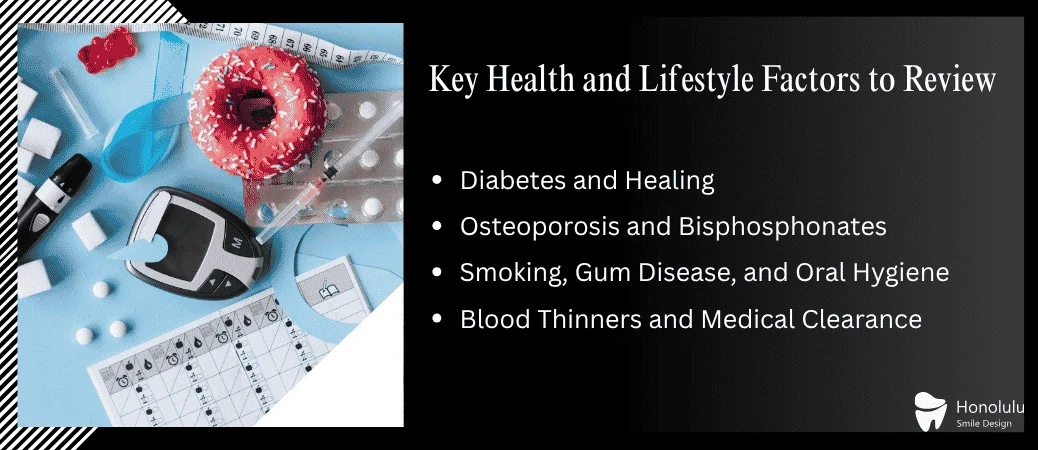
Diabetes and Healing
If you have diabetes, your blood sugar control matters a lot. Dental implants for diabetes patients can still be a safe option when blood sugar is well controlled.
However, uncontrolled diabetes can slow healing and raise your risk of infection.
High blood sugar makes it harder for your gums and bone to heal around the implant. This can lead to delayed healing or, in some cases, implant failure risk from infections.
Talk with your dentist and your doctor about your A1C levels before surgery. Good blood sugar management in the weeks before and after your procedure can make a real difference in how well your implant heals.
Osteoporosis and Bisphosphonates
Osteoporosis weakens bone, which can make it harder to place and support an implant. Your dentist will check your jawbone density with an X-ray or scan before moving forward.
If you take bisphosphonates for osteoporosis, tell your dentist right away. These drugs can sometimes affect bone health and healing after implant surgery, especially if taken for a long time or at high doses.
In many cases, oral bisphosphonates in low doses do not cause major problems. But your dental team may want to coordinate with your doctor to plan the safest approach for your bone health and implant timeline.
Smoking, Gum Disease, and Oral Hygiene
Smoking slows healing and lowers blood flow to your gums, which can hurt your chances of implant success. If you smoke, your dentist may ask you to cut back or quit before and after surgery.
Gum health is just as important. Severe gum disease can damage the bone that holds your teeth and future implant in place. Your dentist will treat any active gum disease before scheduling your implant.
They may also recommend ways to improve your oral hygiene routine before treatment so your gums are healthier and better prepared for healing.
Good oral hygiene habits and daily brushing routines help protect your dental health long after surgery. Keeping your gums clean lowers your risk of infection and helps your implant last for years to come.
Blood Thinners and Medical Clearance
Many older adults take blood thinners, such as warfarin, to prevent blood clots. These medications can affect bleeding during and after implant surgery, so your dentist needs to know about them ahead of time.
Your dental team will likely ask you to get medical clearance from your doctor before surgery. This step confirms it’s safe to pause or adjust your anticoagulants, if needed, without raising your risk of clots.
Common things your dentist may review include:
- Current medications, including blood thinners and bisphosphonates
- Recent blood work or health screenings
- Any history of heart disease or stroke
- Your doctor’s written clearance for surgery
This teamwork between your dentist and doctor helps protect your oral health and overall safety during the implant process.

Jawbone and Gum Requirements
Your jawbone and gums need to be healthy enough to support an implant. The good news is that even if you have some bone loss or gum issues, there are ways to fix these problems before getting implants.
How Missing Teeth Lead to Bone Loss
When you lose a tooth, your jawbone starts to shrink in that spot. This happens because your jawbone needs the pressure from chewing to stay strong.
Without a tooth root to stimulate it, the bone breaks down over time.
Most of this bone loss happens in the first few years after you lose a tooth. The longer you wait to replace a missing tooth, the more bone you may lose.
This matters for implants because they need a certain amount of jawbone to attach to. Less bone can mean fewer options, but it does not always rule out implants.
Gum health also plays a role here. Severe gum disease can destroy both bone and gum tissue, which is why treating it early is so important for keeping your smile options open.
Evaluating Bone Density With CBCT Imaging
Before you get implants, your dentist will check your bone density and bone quality. This helps them see if you have enough healthy bone to support the implant.
A 3D cone beam CT scan, often called a CBCT scan, is one of the best tools for this job. It gives your dentist a detailed 3D picture of your jawbone from every angle.
This type of scan shows the exact height, width, and density of your bone. It also reveals nerve locations and sinus positions, which helps your dentist plan the safest spot for your implant.
A CBCT scan takes just a few minutes and is painless. Your dentist will use these images to decide if your jawbone can support an implant right away or if you need extra treatment first.
When Bone Grafting or a Sinus Lift May Help
If your CBCT scan shows low bone density, you have options. A bone graft adds new material to your jawbone, giving your body a base to build stronger bone around.
Over time, your body integrates this new material and creates a solid foundation for your implant. This works well for people who have lost bone from missing teeth, gum disease, or an injury.
If you need an implant in your upper back jaw, you might need a sinus lift instead. This procedure raises the sinus floor and adds bone in the space below it, giving your implant more room to anchor securely.
Both procedures add healing time to your treatment plan, often several months. But they can turn a “not enough bone” situation into a solid opportunity for a successful implant.
The Dental Implant Treatment Journey
Getting dental implants involves a few clear steps, from your first checkup to your final tooth. Knowing what happens at each stage can help you feel ready and confident about the process.
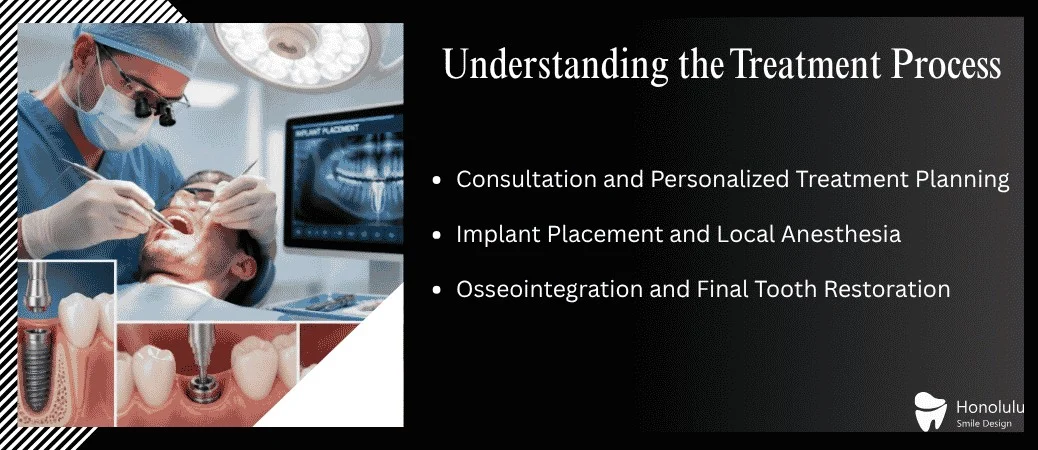
Consultation and Personalized Treatment Planning
Your journey starts with a comprehensive implant evaluation. At Honolulu Smile Design, Dr. John Ha evaluates your gums, jawbone, medical history, and overall oral health to determine whether dental implants are right for you.
Most offices use a 3D cone beam CT scan to get a detailed picture of your jaw. This scan shows bone thickness and helps your dentist plan exactly where each implant should go.
During this visit, you’ll also talk about your medical history. Things like diabetes or bone density can affect your plan, but they don’t rule out treatment.
Your dentist will then map out your dental implant process step by step. This includes:
- Number of implants needed
- Type of implant (single tooth or full arch)
- Timeline for healing and follow-up visits
Implant Placement and Local Anesthesia
Once your plan is ready, it’s time for the dental implant surgery. This is a type of oral surgery, but it’s usually done in-office and doesn’t require a hospital stay.
Your dentist will numb the area with local anesthesia so you stay comfortable throughout the procedure. Some patients also choose sedation if they feel nervous.
During surgery, your dentist places a small titanium post into your jawbone. This post acts as the new root for your replacement tooth.
The procedure usually takes one to two hours, depending on how many implants you need. Afterward, you may have some swelling or soreness, but this typically fades within a few days.
Osseointegration and Final Tooth Restoration
After surgery, your jawbone needs time to heal around the titanium post. This process is called osseointegration, and it usually takes three to six months.
During this time, the bone grows tightly around the implant, creating a strong, stable base.
Successful osseointegration is an important part of long-term dental implant success because it allows the implant to function securely like a natural tooth root.
In rare cases, delayed healing can happen, especially if you smoke or have uncontrolled health conditions. Your dentist will monitor your progress with checkups to make sure everything is healing well.
Once healing is complete, your dentist attaches a small connector called an abutment to the implant. This piece links the implant to your custom-made crown.
The final step is placing your new crown, which completes your tooth replacement. Your dentist will match the color and shape to your natural teeth for a smooth, natural look.
Choosing the Right Tooth Replacement Solution
Tooth replacement options vary widely in cost, comfort, and how long they last. Knowing the differences between implants, bridges, and dentures can help you pick the choice that fits your health, budget, and lifestyle.
Single Implants, Bridges, and Full-Arch Treatment
If you’re missing just one tooth, a single implant is often your best bet. It replaces the tooth root with a titanium post, so it won’t affect the teeth next to it.
A bridge, on the other hand, uses your neighboring teeth for support. This means those teeth need to be filed down, which can weaken them over time.
If you’re missing several teeth in a row, full-arch treatment might make more sense. This method uses a handful of implants to support a full set of replacement teeth.
It’s a bigger procedure, but it can restore your bite and boost your quality of life by letting you eat and speak with confidence again.
Implant-Supported Dentures Versus Traditional Dentures
Traditional dentures sit on your gums and can slip or feel loose, especially when you eat certain foods. This can make chewing tough and may affect your nutrition if you start avoiding harder foods like meat or raw veggies.
Implant-supported dentures snap onto a few implants placed in your jaw. They stay put, so you can chew more naturally and worry less about them shifting while you talk or eat.
This option also helps protect your jawbone. Your jaw needs pressure from chewing to stay strong, and implants provide that in a way traditional dentures can’t.
Here’s a quick comparison:
| Feature | Traditional Dentures | Implant-Supported Dentures |
| Stability | Can slip or move | Stays firmly in place |
| Bone health | Doesn’t stop bone loss | Helps slow bone loss |
| Comfort | May cause sore spots | Fits more securely |
| Maintenance | Removable, easy to clean | Removable or fixed, depending on design |
Costs, Dental Insurance, and Long-Term Value
Cost is often the biggest factor in choosing a tooth replacement option. A single implant can run up to $6,000 without insurance, while dentures usually cost less upfront.
That said, dentures often need adjustments or replacements over the years. Implants can last a decade or longer with good care, which may save you money down the road.
Check your dental insurance plan carefully, since coverage for implants varies a lot. Some plans cover a portion of the cost, while others may not cover implants at all.
Talk with your dentist about payment plans or financing options if cost is a concern.
Weighing the upfront price against long-term value, including better oral health and fewer repairs, can help you make a choice you’ll be happy with for years to come.
Supporting Long-Term Implant Success
Getting your dental implant placed is just the first step. What you do after surgery, and in the months and years that follow, plays a big role in how long your implant lasts.
Recovery Habits That Promote Healing
Your habits during recovery can make a real difference in how well your implant heals. Good nutrition helps your body repair tissue and build strong bone around the implant.
Try to eat foods with protein, vitamin C, and vitamin D. Soft foods are easier on your mouth while the surgical site heals.
If you smoke, quitting (even for a short time) can improve your healing. Smoking narrows blood vessels and lowers oxygen flow, which can slow down implant healing in older adults and raise your risk of problems.
Rest matters too. Your body heals best when you get enough sleep and avoid hard exercise for the first few days after surgery.
Ongoing Hygiene and Professional Maintenance
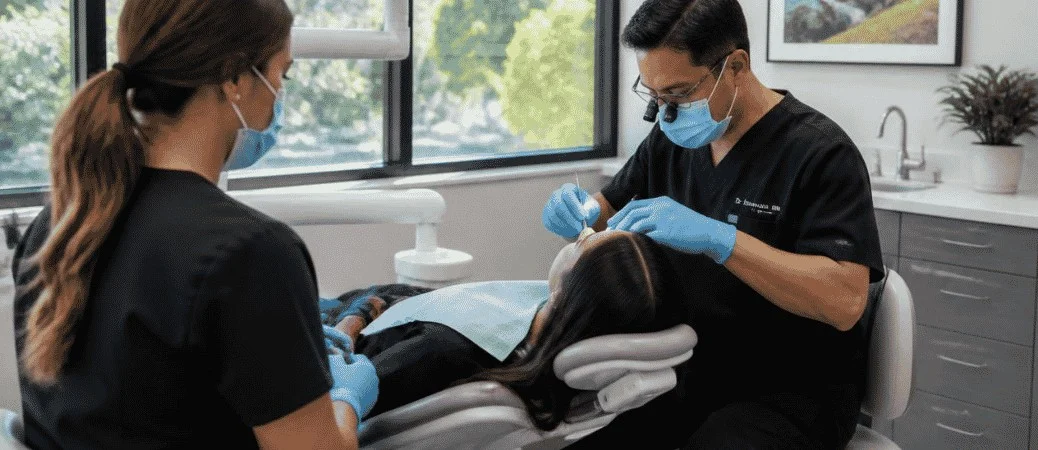
Caring for dental implants starts with maintaining proper oral health every day. Brush twice a day and floss around your implant just like you would with natural teeth.
Gum health matters too, since bacteria around an implant can cause inflammation and, over time, threaten the implant.
Gum health matters a lot here. If bacteria build up around your implant, it can lead to inflammation and, over time, implant failure.
Regular checkups with your dentist help catch small issues before they turn into bigger ones.
Studies show that dental implants have a success rate of over 95% when patients follow good hygiene habits and stick to their care routine.
Your dentist may also suggest an antimicrobial rinse to help control bacteria near the implant site, especially in the weeks right after placement.
When to Speak With an Implant Specialist
Even with good care, it’s smart to know when to reach out to your dentist. Contact them right away if you notice swelling that gets worse, ongoing pain, or any discharge near the implant.
These signs can point to infection or early implant failure, and catching them early makes treatment easier.
It’s also worth checking in if you develop new health conditions, like diabetes, or start new medications, since these can affect your dental health and how your implant holds up over time.
Routine visits, even when nothing feels wrong, help your specialist track your implant and jawbone health year after year.
Frequently Asked Questions
Here are answers to common questions you might have about getting dental implants after 60, including cost, safety, and recovery time.
Are dental implants worth it for seniors?
Yes, in most cases they are worth it. Implants can help you chew food better and can also help stop bone loss in your jaw.
They also tend to last much longer than dentures. Many implants can last for decades with proper care.
Is there an age limit for getting dental implants?
No, there is no upper age limit for dental implants. As long as you have enough bone and are in reasonable health, you can get implants at any age.
People in their 70s, 80s, and even 90s get implants on a regular basis. Your dentist will look at your bone quality and overall health, not just your age.
What is the success rate of dental implants for people over 60?
Dental implants have a high success rate for older adults. Studies show a success rate of 97% at the 10-year mark.
One study compared implant outcomes between people over 65 and a younger group. It found only a 2% failure rate for both groups over 10 years.
Can health conditions like diabetes or osteoporosis affect implant eligibility?
Yes, some health conditions can affect how well implants heal. For example, people with diabetes may have a higher risk of infection after surgery.
Low bone density from osteoporosis can also make it harder to place an implant. Your dentist can check your bone strength and health history before moving forward.
Do dental implants cause problems later in life?
Dental implants are generally safe, but problems can happen. Issues might include an infection, a loose screw, or damage to nearby teeth during the placement process.
These problems are not common. Keeping up with good oral hygiene and regular dental visits can lower your risk of complications.
How long is the recovery process for dental implants in older adults?
Healing time can vary, but it often takes several months for the implant to fully bond with the jawbone. This process is called osseointegration.
During this time, follow your dentist’s cleaning instructions closely. Tell your dentist right away if you notice any pain or looseness around the implant site.