
When you start Invisalign, you might picture a smooth journey to straight teeth with clear trays that you switch out every week or two.
Most people don’t expect to hear words like attachments, refinements, or treatment delays during their appointments. These three elements often catch patients off guard, even though they’re common parts of the treatment process.
Attachments are small tooth-colored bumps bonded to your teeth to help aligners grip better, refinements are additional trays needed after your initial set to fine-tune your results, and delays can happen when teeth don’t move as planned or you don’t wear your trays enough.
Understanding these aspects before you start can help you set realistic expectations. About 20% of people using clear aligners require refinements, and many will have attachments at some point during treatment.
The good news is that these surprises don’t mean your treatment has failed. They’re normal adjustments that help you get the best possible smile.
Knowing what to expect with attachments, refinements, and potential delays can help you stay on track and avoid frustration during your Invisalign journey.
Key Takeaways
- Attachments, refinements, and delays are common parts of Invisalign treatment that many patients don’t expect when they start
- Refinements can add three to six months to your treatment time and happen when teeth don’t move exactly as planned
- Wearing your aligners for 20 to 22 hours daily and attending all appointments helps reduce the need for extra refinements
Learn more about Invisalign and your smile transformation options.
Understanding Invisalign Attachments
Invisalign attachments are small, tooth-colored bumps bonded to your teeth that help clear aligners grip better and move your teeth more precisely.
About 90% of Invisalign cases use these composite dots, which work like handles to guide specific tooth movements that aligners alone can’t achieve.
What Are Invisalign Attachments?
Invisalign attachments are tiny composite resin bumps that your orthodontist bonds to certain teeth during treatment. They’re also called SmartForce attachments or buttons.
These attachments are made from tooth-colored material to blend in with your natural teeth. The composite resin is the same type of material dentists use for fillings.
Your orthodontist places them in specific spots based on your treatment plan. Each attachment has a precise shape and location designed to help your aligners move particular teeth.
While they’re not completely invisible, most people won’t notice them unless they look closely at your smile.
The application process takes about 30 minutes. Your teeth get cleaned and dried first, then your orthodontist uses a template aligner to place the composite material exactly where it needs to go.
How Attachments Help Tooth Movement
Attachments give your clear aligners something to push against when moving your teeth. Without them, the smooth plastic aligners would just slide over your teeth without enough grip to create certain movements.
They act as anchor points for rotation, especially for rounded teeth like canines. When your aligner fits over an attachment, it applies targeted pressure to twist or tilt the tooth in a specific direction.
Attachments also help with vertical movements. They can pull teeth up or down, which is difficult for aligners to do on their own. Some movements require moving the root of the tooth, not just the crown, and attachments make this possible.
Different tooth movements need different amounts of force. Attachments let your orthodontist control exactly how much pressure gets applied to each tooth throughout your treatment.
Types and Placement of Attachments
Your orthodontist chooses from several attachment types based on what movements your teeth need:
Rectangular attachments are the most common type. They help with general tooth movement and rotation.
Beveled attachments have an angled edge that helps guide teeth in a specific direction. These work well for moving teeth up or down.
Root control attachments are larger and help move the root of a tooth, not just the visible crown.
The placement depends on your specific treatment plan. Front teeth attachments may be more visible than ones on your molars. Your orthodontist positions them to balance effectiveness with how noticeable they’ll be.
Most patients get between 3 and 20 attachments. The exact number varies based on how complex your case is and which teeth need to move.
Schedule your consultation today and take the first step toward straighter teeth.
The Role of Refinements in Invisalign Treatment
Refinements are additional aligners created after your initial treatment plan to fine-tune your smile. About 20-30% of Invisalign patients need refinements as part of their treatment, which is a normal part of the process rather than a sign of failure.
Invisalign Refinements: Definition and Purpose
Invisalign refinements are small corrections made after you finish your original set of clear aligners. When your orthodontist checks your teeth at the end of treatment, they look for any final adjustments needed to achieve your planned results.
Refinements help correct issues like gaps that haven’t fully closed or teeth that didn’t move into the exact position planned. Your orthodontist will rescan your teeth using a 3D scanner and create a new treatment plan specifically for these final adjustments.
These refinement trays work just like your initial Invisalign trays. They gradually shift your teeth into the desired position through gentle, controlled movements.
The main difference is that refinement aligners target specific teeth that need extra attention rather than moving your entire smile.
When and Why Refinements Are Needed
You might need refinement aligners for several reasons. The most common cause is that teeth don’t always move predictably, even with advanced 3D planning technology.
Your compliance with wearing aligners affects your results. If you didn’t wear your Invisalign trays for the recommended 20-22 hours per day, your teeth may not have moved as planned.
Extended breaks from wearing aligners during illness or travel can also create the need for refinements.
Certain teeth naturally require more corrections. Teeth needing rotational movements, like upper incisors and canines, move less predictably and often need refinement treatment.
Common reasons for needing refinements:
- Inconsistent wear time with aligners
- Teeth moving faster or slower than planned
- Extended periods without wearing trays
- Complex tooth movements that didn’t complete fully
Refinement Aligners vs. Initial Trays
Refinement aligners look identical to your original Invisalign trays, but they serve a different purpose. Your initial aligners address the overall alignment of your entire smile, while refinement trays target specific problem areas.
The treatment process remains the same. You’ll wear your refinement aligners for 20-22 hours daily, just like before. Invisalign refinement can add 3 to 6 months to your total treatment time, depending on how many adjustments you need.
You may notice new attachments on different teeth during refinements. These small tooth-colored bumps help the refinement trays grip specific teeth better to achieve the final movements your orthodontist planned.
The number of refinement trays you receive depends entirely on your individual case. Some patients only need a few additional aligners, while others may require several sets to perfect their results.
Contact us today to get expert answers and personalized advice.
Common Reasons for Delays and Surprises
Treatment delays often happen when teeth don’t move as predicted or when daily habits interfere with progress. Problems with attachments, inconsistent wear time, and the complexity of your starting alignment can all add weeks or months to your timeline.

Tracking Issues and Missed Wear Time
Tracking problems occur when your teeth don’t follow the digital plan as closely as expected. Your aligner trays might feel loose or not snap into place properly. This usually means one or more teeth are lagging behind schedule.
The biggest cause of tracking issues is not wearing your aligners enough each day. You need to wear aligners 20 to 22 hours daily for them to work properly.
Taking them out for extended meals, forgetting to put them back in after snacks, or removing them during work meetings can slow your progress significantly.
Your orthodontist will check your tracking at each appointment. If they notice problems, they might ask you to wear your current tray longer or use chewies to help the aligners fit better. Sometimes tracking issues require adjustments to get things back on schedule.
Switching trays too early can also cause tracking problems. Stick to the schedule your orthodontist gives you, even if your aligners feel loose before the switch date.
Complex Cases and Crowded Teeth
Not all Invisalign cases move at the same speed. If you have crowded teeth or a complicated bite, your treatment will naturally take longer than someone with minor spacing issues.
Crowded teeth need more room to shift into their proper positions. Your orthodontist might need to create space gradually by widening your arch or making small adjustments between teeth. These movements require patience because rushing them can damage your gums or bone.
Complex cases often involve rotating teeth, fixing deep bites, or moving molars. These types of tooth movements are biologically slower and need extra time to ensure your smile stays healthy.
Cases requiring numerous attachments typically indicate more complicated movements that extend your timeline.
Your starting alignment directly affects how long wearing Invisalign will take. Severe crowding or major bite corrections might require 18 to 24 months, while simple cases can finish in 6 to 12 months.
Lost or Broken Attachments
Attachments are small tooth-colored bumps bonded to your teeth that help the aligners grip better. When one falls off or wears down, your teeth might stop moving as planned.
You might lose an attachment by eating sticky foods, brushing too hard, or accidentally biting into something tough. Sometimes they just wear down naturally over many months of treatment.
A missing attachment can prevent your aligner from applying the right pressure to that tooth.
Contact your orthodontist right away if you notice a loose or missing attachment. Don’t wait until your next scheduled appointment.
Depending on which tooth it was on, you might need to pause wearing your current aligner or switch back to a previous tray until they can replace it.
Check your attachments regularly by running your tongue over your teeth. They should feel slightly bumpy and secure. Keep the area around them clean to prevent them from loosening or collecting food debris that could weaken the bond.
The Refinement Process: What Patients Can Expect
Your orthodontist will evaluate your progress near the end of treatment through digital scans and assessments. If you need refinements, you’ll receive new custom trays to wear for the same daily duration as your original aligners, with regular check-ups to monitor your final adjustments.
Evaluation and Digital Scans
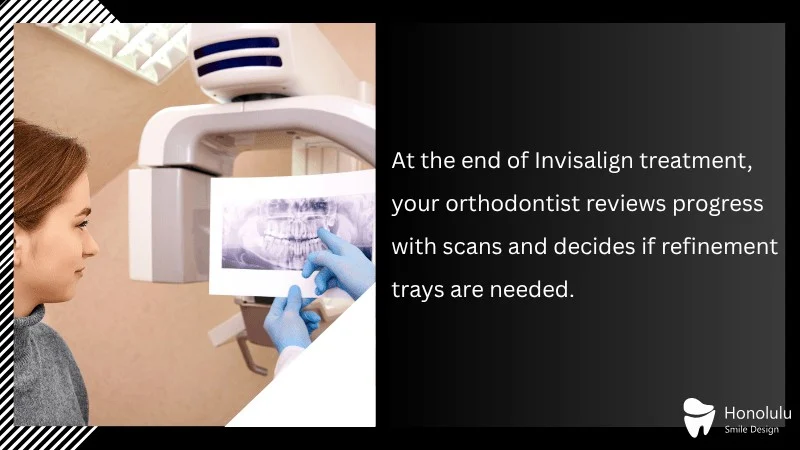
Your orthodontist will schedule an evaluation appointment as you approach the end of your initial Invisalign treatment. During this visit, they’ll assess how well your teeth have moved compared to the planned outcome.
The evaluation typically includes new digital scans of your teeth and bite. These scans help your orthodontist determine if refinements are necessary to achieve your desired results. They’ll look for issues like remaining gaps, crowding, or bite misalignment.
Your orthodontist will discuss their findings with you and explain whether you need additional trays. This conversation gives you a chance to share your own observations about your Invisalign results and ask questions about the next steps.
Creation and Use of Refinement Trays
If you need refinements, your orthodontist will create a new set of custom refinement trays based on your updated scans. These refinement aligners work just like your original clear aligners but target the specific adjustments still needed.
You’ll wear your refinement trays for 20 to 22 hours daily, removing them only for eating, drinking, and cleaning. The process is exactly the same as your initial treatment phase. Most refinement treatments add 3 to 6 months to your overall timeline.
You might need just one round of refinements or several rounds depending on how close you are to your treatment goals. Your orthodontist will let you know how many sets of trays to expect.
Monitoring Progress and Check-Ups
You’ll continue attending regular appointments with your orthodontist throughout the refinement process. These check-ups allow your provider to track how your teeth are responding to the refinement aligners and ensure everything is progressing as planned.
During these visits, you’ll receive your next set of Invisalign trays in the correct sequence. Your orthodontist will check that your current trays fit properly and that your teeth are tracking as expected.
Once you and your orthodontist are satisfied with your final results, you’ll complete the refinement phase. At that point, you’ll transition to wearing retainers to maintain your newly aligned smile.
Managing Attachments and IPR During Treatment
Your orthodontist uses attachments and interproximal reduction as precision tools to guide teeth into their correct positions. These techniques help clear aligners work more effectively, especially in complex cases where teeth need significant movement or rotation.
Interproximal Reduction (IPR) Explained
IPR involves carefully removing tiny amounts of enamel between your teeth to create space. Your orthodontist uses special strips or discs to gently polish the sides of specific teeth.
The amount removed is very small, usually between 0.2 and 0.5 millimeters total. This stays well within safe limits since tooth enamel is typically 2 to 3 millimeters thick on the sides.
IPR is typically included in your overall Invisalign treatment cost rather than billed separately. The procedure itself takes just a few minutes and most patients report feeling only slight pressure or vibration.
After IPR, you might notice small gaps between your teeth temporarily. These spaces close as your aligners continue moving your teeth into alignment.
When and Why IPR Is Used
Your orthodontist recommends IPR when you have crowded teeth that need extra space to align properly. Creating this space allows teeth to slide past each other instead of pushing against one another.
IPR also helps prevent black triangles from forming near your gums as teeth straighten. It can improve how your upper and lower teeth fit together when you bite down.
Treatment planning decisions around IPR and attachments have a major impact on whether cases finish as expected. Clear aligner treatment achieves about 50% efficacy on average, measuring actual tooth movement against planned movement.
Your orthodontist might schedule IPR at the start of treatment, midway through, or during refinements. The timing depends on your specific tooth movements and how crowded your teeth are.
Attachment Adjustments in Refinements
Invisalign attachments are small tooth-colored bumps bonded to your teeth that give aligners better grip. During refinements, your orthodontist may add new attachments, reshape existing ones, or remove attachments that are no longer needed.
Specific composites are required for attachments to maintain their shape and surface properly. Using different materials can cause attachments to wear down or change form during treatment.
If an attachment falls off or chips during your treatment, contact your orthodontist right away. A missing attachment can affect how well your aligners track and may slow down tooth movement in that area.
Your refinement plan might require different attachment positions than your initial treatment. This helps target specific teeth that didn’t move quite as planned in the first round.
Costs, Timelines, and Tips to Avoid Extra Refinements
Refinement costs vary widely depending on your treatment package, while the time needed typically adds three to six months to your overall plan. Understanding these factors and following best practices can help you minimize the chances of needing additional trays.
Cost of Invisalign Refinements
The cost of Invisalign refinements depends largely on which treatment package you originally purchased. Many comprehensive plans include refinements at no extra charge. Lite and Express packages may have different policies.
If refinements aren’t included, you might pay between $2,500 and $7,000 depending on how many additional trays you need. Your orthodontist will assess your specific situation and explain any costs upfront.
Before starting treatment, ask your provider about their refinement policy. Some offices include up to three sets of refinements in the original price. Others charge separately for each round of adjustments.
Getting this information early helps you budget properly and avoid surprises later in your treatment journey.
How Long Do Invisalign Refinements Take?
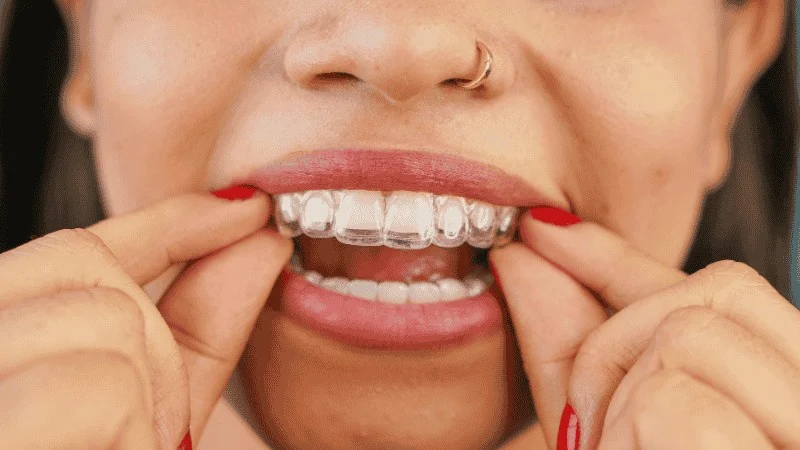
Invisalign refinement time typically adds three to six months to your treatment. The exact duration depends on how many teeth need additional movement and the complexity of the corrections needed.
You’ll wear refinement trays for 20-22 hours daily, just like your original aligners. Each set works gradually to close gaps or rotate teeth into their final positions.
The number of refinement trays varies by case. Some patients only need a few trays while others require more extensive adjustments.
Practical Tips for Staying on Track
Wearing your aligners for the full 20-22 hours each day is the most important step to avoid Invisalign refinements. Consistent wear keeps teeth moving according to your treatment plan.
Attend all scheduled check-up appointments so your orthodontist can catch tracking issues early. Small problems are easier to fix mid-treatment than at the end.
Follow these habits to maximize your Invisalign results:
- Remove aligners only for eating and brushing
- Switch to new trays exactly when instructed
- Report any fit issues immediately
- Use your tracking app if your provider offers one
- Keep attachments clean and intact
After treatment ends, wear your retainers as directed. Proper retainer use protects your investment and maintains your new smile for years to come.
Frequently Asked Questions
Many patients have similar questions about attachments, refinements, and treatment timelines. The answers often depend on your specific case and how your teeth respond to treatment.
Why do some Invisalign patients need attachments, and what do they feel like day to day?
Attachments are small, tooth-colored composite dots that act as handles to help your aligners grip your teeth better. They give your aligners more control when certain teeth need to rotate or move in specific directions.
About 90% of comprehensive Invisalign cases use attachments. Your orthodontist bonds them to your teeth using a dental adhesive in precise locations.
Most patients say attachments feel slightly bumpy when you run your tongue over them. You might notice them more during the first few days, but most people get used to them quickly.
The placement process is straightforward and comfortable. Your dentist cleans your teeth first, then bonds the attachments where needed.
What are Invisalign refinements, and how do you know if you’ll need them?
Refinements are small adjustments made at the end of your Invisalign treatment when your teeth haven’t moved exactly as planned. Your dentist will assess your teeth after your last aligner to see if you need them.
You might need refinements if a gap between your teeth hasn’t completely closed. Sometimes a tooth hasn’t straightened into the desired position.
Your orthodontist will rescan your teeth using a 3D scanner and create a new treatment plan. You’ll then receive additional aligner trays to finish the final details.
How many rounds of refinements are typical, and what affects the number?
Most Invisalign dentists offer up to three rounds of refinements. Many patients need one targeted round to finish the details.
The number you need depends entirely on your personal case. Some teeth move less predictably than others, especially upper front teeth and canines that need rotation.
Refinements can add three to six months to your treatment time. You’ll still need to wear these trays for 20 to 22 hours per day.
What are the most common reasons Invisalign treatment gets delayed, even when you’re wearing aligners consistently?
Your teeth might move more slowly than the digital treatment plan predicted. Every person’s teeth respond differently to orthodontic pressure.
Not wearing your aligners for the full 20 to 22 hours per day is a major cause of delays. Even missing a few hours each day adds up over weeks and months.
Taking your aligners out for an extended period during illness or vacation can throw off your timeline. Your teeth can shift back slightly when aligners aren’t in place.
Sometimes teeth simply don’t move in the direction or speed that was planned. This happens even with the most advanced 3D scanning and planning technology.
How much do Invisalign refinements usually cost, and are they often included in the original price?
The cost of refinements varies from patient to patient. Some patients receive refinements at no extra cost, while others are required to pay.
You’ll likely pay more if you need a lot of additional work or multiple rounds of refinements. Your specific treatment plan and how much your dentist included in the original price matters.
It’s smart to ask about the refinement policy before you start treatment. Your dentist in Honolulu can explain what’s included in your package and what might cost extra.
What is IPR, why might it be recommended, and does it hurt?
IPR stands for interproximal reduction. It’s a process where your dentist removes tiny amounts of enamel between your teeth to create space.
Your orthodontist might recommend IPR when your teeth are crowded and need room to move. It’s also used to adjust tooth size ratios for a better final result.
The process involves using a small strip or disc to gently file between teeth. Most patients feel only mild pressure and no pain during IPR.
Your dentist removes less than half a millimeter of enamel, which is safe and doesn’t harm your teeth. The enamel that’s removed is much less than what natural wear causes over time.