Invisalign before veneers is often the preferred sequence when your teeth need straightening before cosmetic restorations. Improving alignment first may allow more conservative veneer preparation and help preserve healthy enamel.
If you already have veneers, you still have options for straightening your teeth after your dentist checks their condition and your bite.
The order affects how much healthy enamel you keep and whether your veneers suit your finished tooth positions.
Combining Invisalign and veneers also gives you a chance to reassess your cosmetic goals after straightening. You might feel satisfied with fewer veneers or a smaller change.
When you discuss your smile makeover, ask for a coordinated plan that addresses both tooth movement and the changes you want in tooth shape or color.
Why Does Invisalign Usually Come Before New Veneers?
You usually benefit from Invisalign before veneers when crowding or bite problems affect your planned result. Moving your teeth first lets your dentist design veneers around their intended positions.
How Does Straightening First Preserve Natural Tooth Structure?
Straightening teeth before veneer placement may reduce the amount of enamel preparation needed to correct their appearance, particularly when teeth are rotated, crowded, or positioned too far forward.
Your enamel does not grow back, so preserving natural tooth structure deserves careful discussion.
With suitable tooth positions, your dentist has more room to plan conservative veneers; limited clear aligner treatment supports minimally invasive restorative care in appropriately selected cases.
Why Does Bite Alignment Matter for Veneer Placement?
Your bite determines where your upper and lower teeth contact during chewing and jaw movement. Heavy contact on a planned veneer edge increases the risk of chipping or loosening.
Your orthodontic treatment should account for these contacts before veneer placement.
Ask your dentist to explain how your final bite will support the proposed veneer length, especially if you have worn edges or grind your teeth.
What Can Change if You Get Veneers Before Invisalign?
If you choose veneers before Invisalign, later tooth movement changes how those restorations sit within your smile. Their visible angles, spacing, and edge positions might need reassessment after alignment.
Your veneers remain bonded to the teeth they cover as those teeth move. Replacement becomes a consideration if their shapes no longer suit the finished result, so discuss that possibility before committing to new porcelain.
Do You Need Both Treatments or Just One?
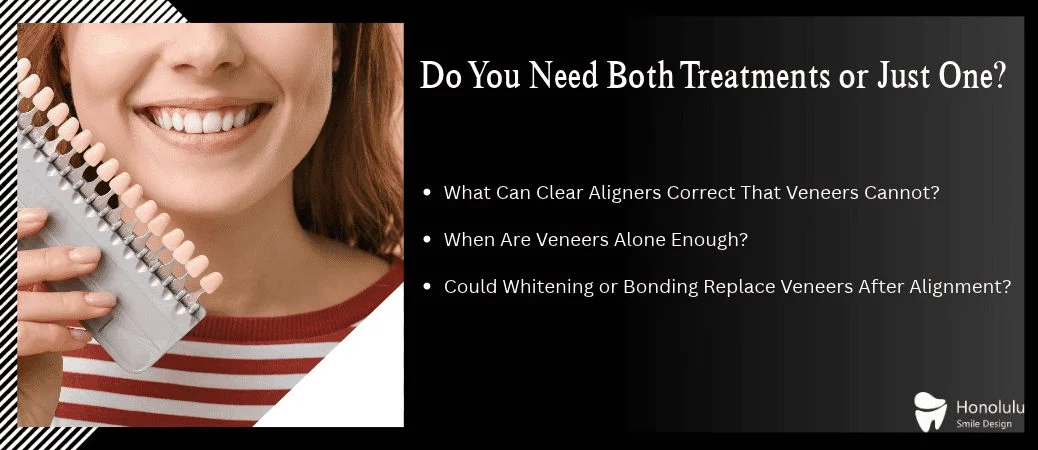
You need both treatments only when tooth movement and lasting cosmetic concerns each call for care. Your first step is to separate concerns about position from concerns about tooth appearance.
| Treatment goal | Invisalign | Veneers |
| Move crowded teeth | Yes | No |
| Correct underlying bite problems | Selected cases | No |
| Change tooth color | No | Yes |
| Reshape chipped edges | No | Yes |
What Can Clear Aligners Correct That Veneers Cannot?
Invisalign gradually moves teeth through controlled orthodontic forces, allowing selected changes in tooth position and alignment.
If you have an overbite, underbite, or crossbite, your dentist must assess its cause and severity. More complex problems sometimes require braces or jaw treatment. Dental veneers change the visible tooth surface without correcting the underlying bite.
When Are Veneers Alone Enough?
Veneers alone are an option when your tooth positions and bite are acceptable, but you want changes to color or shape. A small space or a mildly uneven edge might also suit restorative treatment.
Your cosmetic dentistry plan should explain the trade-offs between porcelain veneers and composite veneers. Porcelain requires laboratory work, while composite is frequently shaped directly on your teeth.
Ask how much preparation each option requires in your case and what future repairs involve.
Could Whitening or Bonding Replace Veneers After Alignment?
After alignment, teeth whitening or small areas of composite bonding might address your remaining concerns. Whitening changes the shade of natural teeth, while bonding adds material to a chipped edge or undersized tooth.
Give yourself a chance to review your straightened smile before approving irreversible preparation. Ask to compare your own teeth with a mockup of the proposed changes so you understand what each extra procedure adds.
Can You Straighten Teeth with Existing Veneers?
You can undergo Invisalign treatment with existing veneers when your teeth, supporting tissues, and restorations are suitable for orthodontic movement.
What Does Your Dentist Check Before Approving Treatment?
Your dentist checks the veneer margins and bond, along with the health of the tooth underneath. Your exam also includes gum support, tooth mobility, and X-rays when needed.
Your Invisalign candidacy also depends on the movements required and your ability to follow the wear schedule. Active decay or gum disease needs treatment before elective tooth movement.
Tell your dentist about sensitivity or any veneer that feels loose.
How Do Veneers Affect Aligner Fit and Attachments?
Your aligners are made to fit the current outer shape of your teeth, including existing veneers. A change in that shape during treatment requires a fit check and sometimes a new scan.
Your plan might include Invisalign attachments, small tooth-colored grips that help deliver specific movements.
Bonding an attachment to porcelain requires a material-specific approach. Your clinician will weigh that option against a different attachment position or movement strategy.
When Might Veneer Repair or Replacement Be Needed?
A loose veneer, open margin, or crack needs assessment before you begin treatment. If a veneer fails during alignment, contact your dental team promptly for instructions about appliance wear.
Your dentist will reassess the aligner fit after any repair. If you already expect to replace aging veneers, moving your teeth before making the replacements helps coordinate their final shapes with your new alignment.
What Will Your Combined Treatment Involve and Cost?
Your combined treatment needs one coordinated sequence and a written estimate covering each stage. The orthodontic and restorative portions should share the same goals from the start.
How Does Digital Smile Design Coordinate Each Stage?
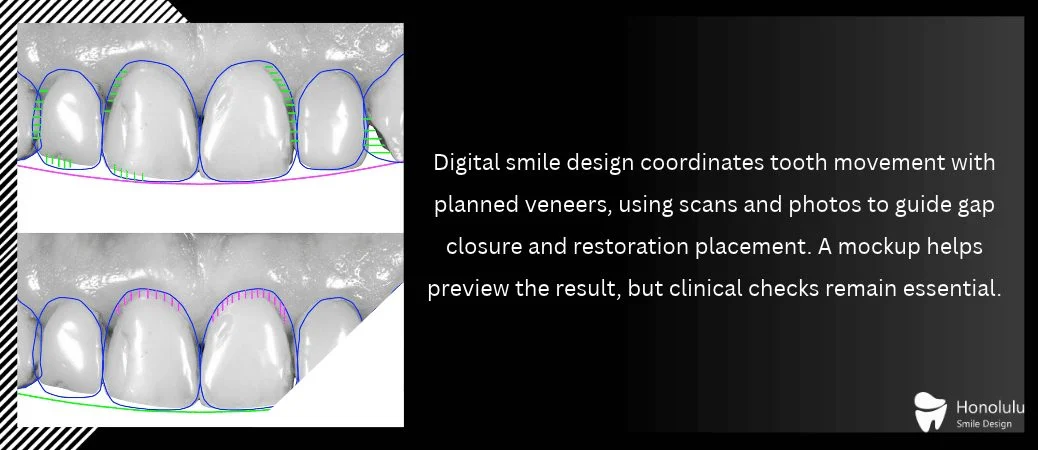
Your digital smile design uses scans and photographs to connect planned tooth movement with your proposed restorations. It helps your team decide where to leave space for a veneer and where to close a gap.
Your restorative goals should inform the orthodontic setup; restoration-guided digital planning coordinates tooth movement with the intended veneer design.
Ask to review a mockup as well as a screen preview. A simulation shows a treatment goal, while your progress still requires clinical checks.
At Honolulu Smile Design, our dental team will evaluate your tooth alignment, bite, and cosmetic goals to help determine whether Invisalign, veneers, or a combination of treatments may be appropriate.
How Long Do Invisalign and Veneer Treatment Take?
Invisalign treatment duration varies depending on the complexity of tooth movement, bite correction, and whether additional aligners are needed.
Minor alignment concerns may require less time, while more complex cases can take considerably longer.
Your treatment timeline also includes any extra aligners needed to refine the result.
Porcelain fabrication adds laboratory time after your teeth are ready, while composite work follows a different schedule. Request a timeline that includes these steps and your retention appointments.
What Affects Invisalign and Veneers Costs?
Your Invisalign cost reflects treatment complexity and the services included in your fee. Your veneer cost depends on the material, number of teeth treated, laboratory work, and preparation required.
Because treatment needs and veneer materials vary, the total cost should be based on a personalized estimate rather than a general price range. Ask whether your estimate includes temporary veneers, refinements, and replacement retainers.
What Should You Check About Insurance and Financing?
Check your orthodontic benefits before starting, including adult eligibility and any lifetime benefit limit. Cosmetic veneers are usually excluded from dental insurance, so request a written benefits estimate.
If you are considering financing, review the payment terms carefully before signing. Ask the dental office which payment options are available and whether promotional financing has any special conditions.
How Do You Protect Your Results Between Stages and Afterward?
You protect your results by keeping teeth in position throughout the transition and fitting your appliances to your finished restorations. Your retention plan should be ready before active aligner treatment ends.
How Is Alignment Maintained While You Wait for Veneers?
Your clinician will prescribe retainers or another suitable appliance while you wait for veneer placement. Follow that wear schedule through planning visits and any laboratory delays.
Tooth preparation and temporary veneers change tooth contours, so your appliance plan needs to account for those changes.
Before each stage, ask which appliance you should wear afterward and whom to contact if it stops fitting.
Will You Need New Retainers After Veneer Placement?
You need your retainers checked after veneer placement because the new contours affect their fit. Your dentist will decide whether adjustment is appropriate or new retainers are required.
Avoid forcing an old retainer over your veneers. Before leaving the placement appointment, confirm how alignment will be maintained until your final retainers arrive, including whether you need an interim appliance.
Which Daily Habits Help Protect Teeth and Veneers?

Your daily oral hygiene protects the natural teeth and gum tissue around your veneers. Brush with fluoride toothpaste and clean between your teeth as directed.
Avoid chewing ice or using your teeth to open packaging, which puts veneer edges at risk. Remove aligners using the technique your team demonstrates.
If you grind your teeth, ask how a protective appliance will work with your retainer schedule.
Plan Tooth Movement Before Your Final Smile Design
For your smile transformation, plan any needed tooth movement before committing to the final veneer shapes.
Invisalign before veneers gives your team the chance to preserve enamel and assess which cosmetic changes remain worthwhile.
At your Honolulu Smile Design consultation, ask for a written sequence covering alignment, restorative care, and retention.
Before approving your smile makeover, confirm how existing veneers will be handled and what repair or replacement costs fall outside your estimate.
Frequently Asked Questions
You can use these answers to clarify the final details of your treatment plan. Your dentist should apply them to your bite and the condition of your teeth.
Can I get veneers immediately after Invisalign treatment?
You can get veneers soon after Invisalign when your dentist confirms that your tooth positions, bite, and gums are ready. Your timing should include any needed refinements and a retention plan; there is no fixed waiting period that suits every case.
Can Invisalign damage veneers I already have?
You face an individual risk of veneer loosening or surface damage during Invisalign, especially if an existing restoration has a weak bond.
Your risk assessment should cover attachment bonding and removal as well as how you insert and remove your aligners.
Will straightening my teeth reduce how many veneers I need?
You might need fewer veneers if alignment resolves the unevenness that first concerned you. Review your result after straightening and ask your dentist to identify the specific benefit of each proposed veneer.
Can I whiten my teeth before getting veneers?
You can whiten your natural teeth before your dentist selects the final veneer shade; existing porcelain veneers will keep their current color.
Your dentist may recommend waiting after whitening before bonding veneers because bleaching agents can temporarily affect bonding conditions. The appropriate interval depends on the whitening method and restorative plan.
Why might a dentist advise against veneers for my teeth?
Your dentist might advise against veneers if you have active decay, unhealthy gums, inadequate enamel, or bite forces that threaten the restorations.
Ask whether treating those problems would improve your suitability and whether bonding or whitening would meet your goals with less enamel removal.