If you’re missing most or all of your teeth, you’ve probably heard both terms tossed around at the dentist’s office. They sound similar, and both use dental implants, but they don’t work the same way day to day.
The main difference is simple: All-on-4 dental implants hold a fixed set of teeth that stays in your mouth all the time, while implant-supported dentures snap onto implants and come out for cleaning.
All-on-4 typically uses four implants per arch, while removable options often use two to six implants to keep the denture in place.
Both are forms of full-arch tooth replacement, and both can improve your quality of life compared to regular dentures.
The right pick depends on your jawbone, your budget, your cleaning habits, and how you want your teeth to feel. Here’s what to know before you decide.
Key Takeaways
- All-on-4 gives you fixed teeth, while implant-supported dentures are removable.
- Fixed restorations usually feel more stable when you chew and talk, but they need special cleaning tools.
- Your bone health, daily habits, and budget should guide the choice, so ask your dentist for a full exam first.
Table of Content
- The Core Difference: Fixed Teeth vs Removable Teeth
- How Each Treatment Is Planned and Placed
- Daily Comfort, Stability, and Function
- Long-Term Care and Jawbone Health
- Choosing the Option That Fits Your Needs
- Frequently Asked Questions
The Core Difference: Fixed Teeth vs Removable Teeth
The biggest split between these two treatments isn’t the number of implants; it’s whether you can take your teeth out at night.
All-on-4 gives you a full set of teeth that stays in your mouth around the clock, while implant-supported dentures snap on and off whenever you want to clean them.
How All-on-4 Creates a Fixed Full Arch
All-on-4 uses four dental implants per arch to hold one solid bridge of prosthetic teeth. Two implants go in the front of the jaw, and two go in the back at an angle.
That angle lets your dentist use the denser bone you already have, which often means less need for bone grafting.
Once the bridge is screwed into place, only your dentist can remove it. You brush and floss around it like natural teeth.
Most people also leave with temporary replacement teeth the same day as surgery. The final bridge doesn’t cover the roof of your mouth, so your sense of taste stays intact.
How Implant-Supported Dentures Snap In and Out
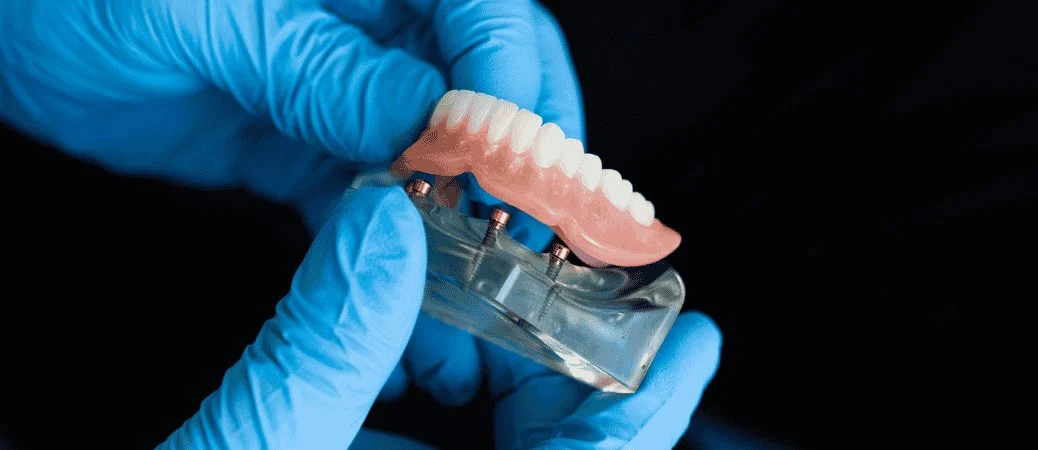
Implant-supported dentures (also called snap-in dentures or implant-supported overdentures) are a removable prosthetic that clips onto implants in your jaw.
Dentists often place 5 to 8 implants per arch for this design, using locator attachments or a custom bar to hold the denture steady.
You pop the denture out each night to clean it and to clean the attachment points.
Here’s the tradeoff: these are far more stable than a regular denture, but they still cover part of your gums and palate.
Some patients notice a little movement when chewing tough foods, and the plastic clips inside the denture wear down and need replacing every so often.
Where Traditional Dentures Fit Into the Comparison
Traditional dentures use no implants at all. They rest on your gums and stay put through suction, fit, and sometimes adhesive paste.
If you’re still weighing tooth implants vs dentures, the biggest difference is that implants anchor replacement teeth to the jaw instead of relying on the gums for support.
| All-on-4 | Implant Dentures | Traditional Dentures | |
| Implants | 4 per arch | 5–8 per arch | None |
| Remove at night? | No | Yes | Yes |
| Covers palate? | No | Partly | Yes |
| Typical lifespan | 15–20+ years | Varies by design | 5–8 years |
Because nothing anchors them to bone, your jaw keeps shrinking underneath. That’s why traditional dentures need relines every one to two years as the fit loosens.
They’re the least expensive and least invasive choice, and they’re often used as a temporary step while implants heal.
How Each Treatment Is Planned and Placed
Both treatments start with a CT scan, digital images, and a review of your jawbone, but the surgery itself looks different once your implant dentist starts placing posts.
The number of implants, their angles, and how long you wait for final teeth all change based on which option you pick.

Implant Placement and Angled Posterior Implants
With All-on-4, your dentist places four titanium implants per arch. The two front posts go in straight, while the two back posts are tilted at roughly 30 to 45 degrees.
That angle is the whole point. Tilting the back implants lets them reach a denser bone near the front of the jaw and avoid the sinus cavity in the upper arch.
Implant-supported dentures usually need more support. Most cases use 5 to 8 implants per arch, placed upright and spread across the ridge.
Those posts get attachments on top, such as ball or locator abutments, or a bar the denture snaps onto. All-on-4 uses multi-unit abutments instead, since the bridge screws down and stays put.
Either way, this is real implant surgery. You’ll be numbed and often sedated, and most arches are finished in one appointment.
The Role of Bone Density and Bone Grafting
Bone is the deciding factor in treatment planning. Your dentist measures both the height and the width of your ridge before choosing a path.
Years of missing teeth cause bone loss, especially in the back of the jaw. That’s often where traditional dental implants run into trouble.
All-on-4 was built around this problem. Because the tilted posts make use of the bone you already have, many patients skip grafting entirely.
Implant-supported dentures need adequate bone at each planned site. If your bone density is low in one area, you may need a graft or a sinus lift first.
That adds time. Grafts usually take 4 to 9 months to heal before implants can go in.
Temporary Teeth, Healing, and Final Restorations
All-on-4 patients typically leave with a temporary acrylic bridge on the same day as surgery. It’s screwed to the implants, so you don’t go home without teeth.
With implant-supported dentures, you’ll often wear your existing denture, relined with a soft material, while the sites heal.
Then comes osseointegration, the process where bone grows tightly around each implant post. This takes about 3 to 6 months.
| Stage | All-on-4 | Implant-Supported Dentures |
| Day of surgery | Fixed temporary bridge | Modified or relined denture |
| Healing time | 3–6 months | 3–6 months, longer with grafting |
| Final result | Screw-retained zirconia or acrylic bridge | Snap-in denture you remove daily |
During healing, you’ll stick to softer foods and avoid biting hard into the front. Your dentist checks the implants along the way, then takes new impressions once things are stable.

Daily Comfort, Stability, and Function
The way a full-arch tooth replacement feels while you eat, talk, and go about your day is often what decides the choice.
Chewing power, how much plastic sits against your palate, and how secure your teeth feel in a crowded room all shift depending on whether your prosthesis is fixed or removable.

Chewing and Bite Force
Both options beat traditional dentures because the implants transfer force into your jawbone instead of resting on gum tissue. Still, the two don’t feel identical at dinner.
All-on-4 dental implants are screwed into place, so the bridge doesn’t lift or rock when you bite into something firm. Many people go back to eating apples, steak, and crusty bread.
Removable implant overdentures snap onto attachments and stay far more secure than a conventional denture, but a small amount of movement is normal.
That’s why they usually provide improved stability and function without quite matching the anchored feel of a fixed arch.
Your bone volume and bite strength also matter. Heavy grinders and people with strong bite force are often steered toward more implants or a fixed design.
Speech, Palate Coverage, and Comfort
Palate coverage is a bigger deal than most people expect. A traditional upper denture covers the roof of your mouth, which dulls taste and can make certain sounds tricky at first.
A fixed All-on-4 bridge leaves your palate completely open. Food tastes more like it should, and hot and cold feel normal again.
Snap-in dentures fall in the middle. Many upper overdentures can be made in a horseshoe shape with reduced palate coverage, though some designs still keep a thin section for strength.
Speech usually settles within a few weeks either way. Fixed arches tend to feel less bulky, while removable ones give you a break at night.
Comfort also depends on gum health, since fixed options ask for careful daily cleaning around and under the bridge.
Confidence and Everyday Quality of Life
Here’s where the practical stuff shows up:
| What you notice | Fixed All-on-4 | Snap-in implant dentures |
| Comes out at night | No | Yes |
| Slipping while talking | Very unlikely | Rare, but possible |
| Cleaning routine | Brush, floss threaders, water flosser | Remove and scrub directly |
| Adhesive needed | None | None |
Not worrying about your teeth shifting mid-sentence changes how you eat out and laugh with friends. That’s a real quality of life gain, and it’s one reason fixed teeth feel secure much like natural teeth.
Removable options still deliver big wins. You get a stable bite, easier at-home hygiene, and often a lower cost with more flexibility.
Your oral health habits should guide the call. If daily cleaning under a fixed bridge sounds like too much, a removable design may protect your gums better long term.
Long-Term Care and Jawbone Health
Both options ask something of you every single day, but the daily routine looks different depending on whether your teeth come out or stay put. How well you maintain them can also affect how long dental implants last.
Your jawbone responds differently to each setup, which is why regular checkups matter just as much as brushing.
Cleaning Fixed All-on-4 Restorations
Your All-on-4 bridge stays in your mouth, so you clean around it instead of taking it out.
Caring for dental implants means paying close attention to areas where food and plaque can collect.
With a fixed bridge, the tricky spot is the small gap between the underside of the bridge and your gums, which a regular toothbrush usually can’t reach.
Most people use a combination of tools:
- Water flosser to flush debris from under the bridge
- Interdental brushes sized to fit between implant posts
- Superfloss or implant floss threaded beneath the framework
- A soft-bristled toothbrush twice a day for the surface
Your dental team will also unscrew and deep-clean the prosthesis at intervals they recommend.
This lets them check the screws, look at the gum tissue underneath, and address any issues early before they turn into bigger problems.
Caring for Removable Implant Dentures
A removable prosthetic is simpler to clean in some ways, since you can hold it in your hands.
Take it out, brush it with a denture brush and non-abrasive cleaner, then soak it as your dentist instructs. Rinse it after meals when you can.
Don’t stop there, though. The implant attachments still in your mouth need attention too. Brush around each abutment gently and clean your gums and tongue before you put the denture back in.
The plastic or nylon clips inside implant-supported overdentures wear down with use. Expect to have them replaced periodically so the denture keeps its snug fit rather than loosening over time.
Bone Resorption, Gum Health, and Follow-Up Visits
When teeth are lost, the jawbone under them begins to shrink because nothing stimulates it anymore. Implants change that equation.
Titanium posts fuse with the bone and transfer chewing forces into it, which helps maintain bone density in the areas surrounding them. Traditional dentures resting on gums don’t offer that stimulation, so the jaw gradually shrinks and the fit changes.
Gum health matters just as much. If you have active gum disease before dental implants, it may need to be addressed before treatment.
After implant placement, plaque left around the restoration can inflame the tissue and, if ignored, affect the bone holding the implant in place.
Plan on seeing your dentist at least twice a year, or more often if they suggest it. These visits usually include:
| Check | Why It Matters |
| X-rays | Track bone levels around each implant |
| Gum exam | Spot inflammation before it spreads |
| Bite check | Uneven pressure can stress implants |
| Prosthesis review | Catch worn clips, chips, or loose screws |
If you notice movement, clicking, discomfort when biting, or other loose implant symptoms, don’t wait for your next routine visit.
Having the implant and restoration checked early can help identify whether the problem involves the prosthesis, an attachment, or the implant itself.
Choosing the Option That Fits Your Needs
The right choice usually comes down to three things: how much bone you have, whether you want to take your teeth out at night, and what your budget allows.
If you’re still comparing broader tooth replacement options, your implant dentist can also explain how fixed and removable implant solutions compare with other ways to replace missing teeth.
When All-on-4 May Be a Better Fit
All-on-4 implants tend to work well if you want teeth that stay put. You brush them like natural teeth and never remove them.
This option can also help if you have some bone loss in the back of your jaw. The two back implants are placed at an angle, which lets your dentist use the bone you still have.
That angled placement may reduce the need for bone grafting in certain cases.
Many people also pick All-on-4 for chewing power. Fixed teeth don’t shift, so biting into firmer foods feels more natural than it does with traditional dentures.
You may prefer this route if you found removable dentures uncomfortable in the past.
When Implant-Supported Dentures May Make Sense

Implant-supported dentures snap onto implants but come out for cleaning. If you like the idea of scrubbing your teeth over the sink and soaking them overnight, this can feel simpler.
They often use fewer implants per arch, which can mean a lower starting cost. That matters if you’re trying to keep the initial investment down.
This choice can also suit you if:
- You have arthritis or limited hand mobility and struggle with tiny cleaning brushes
- You want a big upgrade from regular dentures without a fixed restoration
- Your bone density limits where implants can go
Keep in mind that the snap-on parts wear down. Expect to replace attachments every year or two as part of regular upkeep.
Costs, Dental Insurance, and Personalized Decisions
Prices shift based on the number of implants, the materials in your new teeth, and whether you need extractions or grafting first.
These dental implant cost factors mean there isn’t one flat price that applies to every All-on-4 or implant-supported denture case.
Dental insurance coverage is a mixed bag. Some plans pay a portion of the surgery, some cover only the denture part, and many have a yearly maximum that a full-arch case will pass quickly.
A few practical steps help:
- Ask your office for a written treatment plan with itemized fees
- Request a pre-treatment estimate from your insurance company
- Ask about financing or phased treatment if the total feels out of reach
Bring your questions to a consultation with a Honolulu dentist and a 3D scan. Seeing your own bone on screen makes the decision much clearer.
Frequently Asked Questions
Both treatments use implants, but they differ in how many implants you get, whether the teeth come out at night, and what your daily cleaning routine looks like. Here are straight answers to the questions patients ask most often.
Are implant-supported dentures the same as All-on-4?
No, they are two different treatments. Implant-supported dentures are removable. They snap onto attachments on top of your implants, and you take them out to clean them.
All-on-4 is a fixed set of teeth. Your dentist screws the bridge onto the implants, and only a dental professional can take it off. Some practices use terms like All-on-X or fixed full-arch implants.
What is the main difference between All-on-4 and implant-supported dentures?
The biggest difference is removable versus fixed. That one detail affects almost everything else about your experience.
A few other differences to keep in mind:
- Number of implants: All-on-4 typically uses four implants per arch, while snap-in dentures often need more implants for good support.
- Feel: Fixed teeth stay put during chewing. Snap-in dentures are far steadier than regular dentures, but you may still notice slight movement.
- Cleaning: You brush and soak a removable denture. With a fixed bridge, you clean around and under it using floss threaders, interdental brushes, or a water flosser.
Are All-on-4 dental implants better than implant-retained dentures?
Neither one wins for everybody. The right pick depends on your bone, your gum health, your budget, and how you want to care for your teeth.
If you want teeth that stay in your mouth all the time and feel closest to natural teeth, fixed is usually the better fit. If you like the idea of taking your teeth out at night and cleaning them in your hand, a snap-in denture may suit you better.
Which option costs more: All-on-4 or implant-supported dentures?
Fixed full-arch teeth usually cost more up front. You are paying for a stronger framework, more lab work, and a more detailed surgical plan.
Snap-in dentures tend to be a lower-cost, removable option, which is part of why many patients choose them.
Don’t forget long-term costs. Both options need checkups, and parts like snap attachments or a worn bridge may need replacing after several years.
What are the downsides of implant-supported dentures?
They still cover your gums with an acrylic base, so your bite may not feel quite as natural as a fixed bridge. You also have to remove them every night, which some people find annoying.
The snaps or clips wear down with use. They need to be swapped out from time to time so the denture keeps its grip, and the denture itself may need a reline as your gums change shape.
Are implant-supported dentures worth it?
For most people who have struggled with loose traditional dentures, yes. Because they lock onto implants instead of relying on suction or adhesive, they stay much more secure while you eat and talk.
They also cost less than a fixed arch and are simple to clean. The best way to know if they fit your situation is an exam with X-rays or a 3D scan, so your dentist can check your bone and go over both paths with you.